

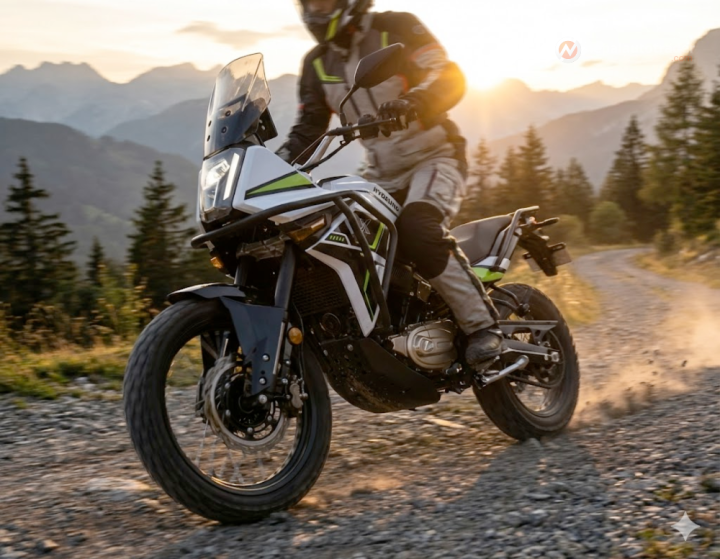
Evok Nepal has quietly secured a batch of Hyosung’s latest 250 cc adventure‑oriented machine. While the company has not staged a formal press event, insiders confirm the bike will soon roll out of Kathmandu showrooms. The model is built around a twin‑engine architecture – a rarity in the 250 cc class, where single‑cylinders dominate.
The powerplant is a 248.2 cc liquid‑cooled unit with 8 valves, a SOHC head and EFI injection. Twin pistons fire at a high‑rev limit, delivering 25.5 PS at 9,500 rpm and a peak 20 Nm of torque at 7,000 rpm. That translates to a smooth, linear surge that feels more like a 300 cc bike than a typical 250.
That matters because riders in Nepal’s rugged hills often crave low‑end grunt for steep climbs and high‑rev pull for winding mountain passes. The twin‑cylinder layout promises less vibration and a more refined ride.
Twin‑cylinders cut engine vibration in half compared with a single‑cylinder counterpart. The result is a smoother throttle response and reduced rider fatigue on long off‑road treks. The 6‑speed gearbox is spaced to keep the engine in its sweet‑spot, whether you’re crawling up a steep trail or cruising on the highway.
The bike also sports dual‑disc brakes up front and a dual‑channel ABS system, giving confidence on slippery gravel. LED lighting—headlamp, tail‑lamp and turn signals—adds modern visibility without draining the battery.
A 7‑inch TFT digital display sits behind the handlebars, offering shift‑light, fuel gauge, trip meter and selectable riding modes. An adjustable windscreen and a vertical‑stacked LED headlamp complete the adventure‑ready package.
Most 250 cc adventure bikes in Nepal, such as the KTM 250 Adventure and Honda CB250, rely on a single‑cylinder engine. Hyosung’s twin‑cylinder approach gives it a distinct character:
The bike’s chassis features an upside‑down front fork, a monoshock rear, and a wire‑spoke wheel design that blends classic adventure aesthetics with modern functionality. Tubeless tires and a sturdy side‑box add practicality for long hauls.
Evok Nepal hints that the model will be officially unveiled “in a few weeks.” Industry chatter suggests a launch window in Q2 2026, likely aligned with the spring riding season. Pre‑orders may open shortly after the reveal, with first deliveries expected by June 2026.
Dealerships in Kathmandu, Pokhara, and Biratnagar have already received demo units for test‑rides. That rollout plan mirrors how other manufacturers stagger introductions across major Nepalese hubs.
Introducing a twin‑engine in the 250 cc class shakes up the competitive landscape. Riders now have a high‑rev, low‑vibration alternative that sits comfortably between the cheap commuter and the pricey 400‑cc adventure bikes.
If the NPR 7.5 lakh price holds, the bike could attract a new segment of enthusiasts who previously hesitated due to cost or vibration concerns. That could push rivals to revisit their own engine configurations or price structures.
The move also signals Hyosung’s commitment to the Nepalese market, a region where adventure touring is gaining momentum. Expect more dealer events, rider clubs, and possibly a factory‑supported rally series later this year.
Q: What is the exact price of the new Hyosung 250 cc adventure bike in Nepal? A: The bike is expected to retail around NPR 7.5 lakh, which translates to roughly ₹7 lakh 50 thousand. Exact pricing may vary by dealership and optional accessories.
Q: When will the bike be officially launched and available for purchase? A: A public launch is anticipated in Q2 2026, with pre‑orders opening shortly after the announcement and first deliveries slated for June 2026.
Q: How does the twin‑engine power output compare to the KTM 250 Adventure? A: Hyosung’s twin‑cylinder produces 25.5 PS at 9,500 rpm, a modest edge over the KTM’s roughly 24 PS figure, while delivering 20 Nm of torque versus the KTM’s about 18 Nm.
Q: Does the bike come with ABS and LED lighting as standard? A: Yes, the model includes a dual‑channel ABS system, full‑LED lighting package, and a 7‑inch TFT digital display as standard equipment.
Q: Will there be any special variants or color options at launch? A: Early reports suggest a single standard colour scheme with optional dealer‑specific graphics. Additional colourways may be announced closer to launch.
Q: How does the twin‑engine affect fuel consumption? A: Twin‑cylinders tend to be slightly less fuel‑efficient than single‑cylinders, but Hyosung’s EFI system aims for a balanced consumption of around 3.5 L/100 km under mixed riding conditions.
PREVIOUS NEWS
NEXT NEWS

Nepal Auto-Trader is one-stop platform for all automotive needs. We provide unbiased and unparalleled news/reviews of all auto-motives being launched in Nepalese Auto-Industry. Find recent updates and price of bikes/cars, compare and review recently launched bikes/cars, buy/sell/trade reconditioned cars/bikes and all government news about changing rules and regulation, road safety by subscribing us.

Subscribe to our Newsletter
© Copyright 2026, Nepal Autotrader


.png)
.png)