

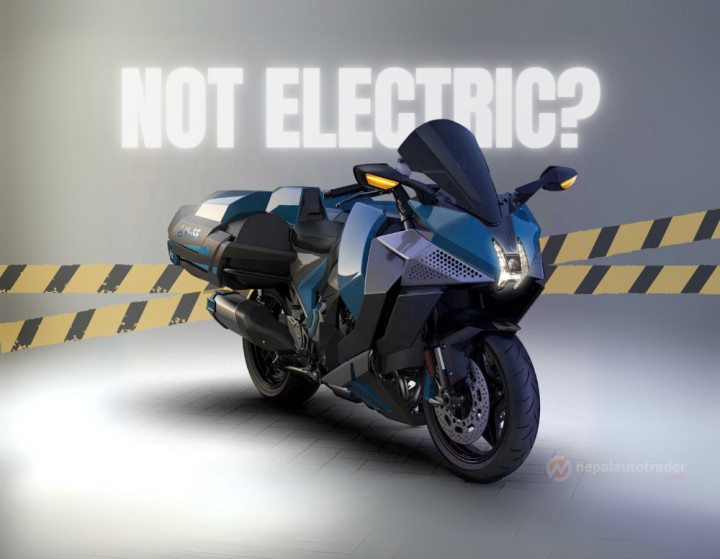
Kawasaki has pulled the wraps off its hydrogen-powered Ninja H2 prototype — a machine that could redefine how motorcycles are built, fueled, and ridden. It’s not electric, not hybrid, but something radically different: an internal combustion engine powered entirely by hydrogen, producing nothing but water vapor.
With its 998cc supercharged inline-four engine, the bike promises raw power without the pollution. Unveiled in July after development began in March 2023, this concept marks a turning point in clean motorcycle engineering.
This isn't just Kawasaki's project. In a rare industry collaboration, Honda, Yamaha, Suzuki, and Kawasaki have united to develop this hydrogen-powered prototype. Instead of competing, they’ve teamed up to accelerate the shift toward carbon-free motorcycles.
This hydrogen Ninja H2 is Japan’s first collaborative hydrogen motorcycle, signaling a powerful, unified response to climate concerns and fossil fuel dependency.
Forget batteries. This bike runs on hydrogen combustion, a cleaner take on internal combustion. Here's what happens under the tank:
You still get the engine roar, responsive throttle, and performance punch — minus the emissions.
As promising as it is, hydrogen tech isn’t ready for mass adoption yet. The Ninja H2 Hydrogen is still in prototype phase, and production is likely a decade away.
Here’s why:
Lack of hydrogen refueling infrastructure
High production costs
Regulatory hurdles for new fuel types
Need for global adoption to scale effectively
Until governments roll out hydrogen station networks and policy support, these bikes will remain concept machines.
Japan is betting big on hydrogen-powered vehicles — not just bikes, but buses, trucks, and even aircraft. This Kawasaki Ninja H2 Hydrogen aligns with Japan’s national hydrogen roadmap, aiming for net-zero transportation emissions by 2050.
It’s not just about clean engines — the push includes:
Reducing the number of passenger vehicles
Expanding green public transport
Designing cities around walking and biking
Hydrogen motorcycles can play a big role in that future — especially for short- to mid-distance urban mobility.
Tech alone can’t drive change. For hydrogen-powered bikes like the Ninja H2 to succeed, governments need to step in:
Invest in refueling infrastructure
Offer tax breaks and subsidies
Streamline road approval for hydrogen vehicles
Incentivize hydrogen adoption in fleets and delivery services
A public-private partnership is the only way to make hydrogen-powered motorcycles viable on a global scal
Kawasaki’s Ninja H2 Hydrogen isn’t just an innovation — it’s a rebellion against the status quo. While electric motorcycles are making progress, hydrogen offers a quicker refueling alternative with familiar riding dynamics, and that matters for purists and performance lovers alike.
With Japan’s Big Four joining hands and the world watching, the hydrogen motorcycle era has begun — and the Ninja H2 is leading the charge.

Nepal Auto-Trader is one-stop platform for all automotive needs. We provide unbiased and unparalleled news/reviews of all auto-motives being launched in Nepalese Auto-Industry. Find recent updates and price of bikes/cars, compare and review recently launched bikes/cars, buy/sell/trade reconditioned cars/bikes and all government news about changing rules and regulation, road safety by subscribing us.

Subscribe to our Newsletter
© Copyright 2026, Nepal Autotrader


.png)
.png)