

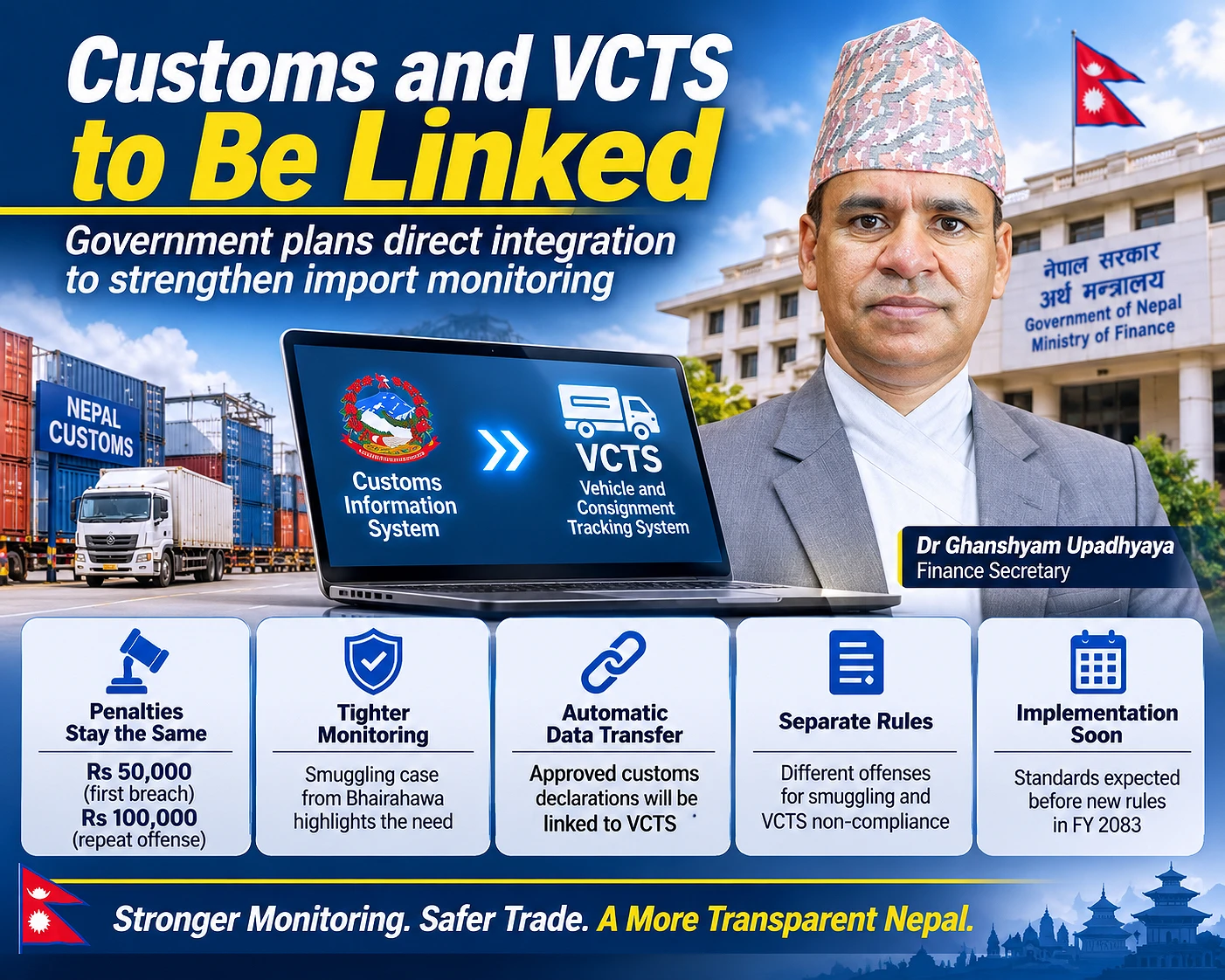
The Vehicle and Consignment Tracking System (VCTS) was introduced to give authorities a real‑time view of goods moving across Nepal’s road network. By assigning a unique identifier to each vehicle and cargo load, the system helps prevent loss, theft, and the mixing of illegal goods with legally imported consignments. Since its launch, VCTS has become a cornerstone of the country’s logistics infrastructure, but gaps remain when shipments cross customs checkpoints.
During a recent Finance Committee meeting, officials outlined a plan to merge the Customs Information System with VCTS. The idea is simple: once a customs declaration receives approval, the details would flow automatically into VCTS, eliminating manual entry and reducing the chance of human error. Finance Secretary Dr Ghanshyam Upadhyaya emphasized that the automatic transfer would create a single, auditable trail from the point of import to the final destination.
The proposal draws a clear line between domestically produced goods and imported items. Domestic products will still be entered into VCTS by the usual manual process, while imported goods will be linked directly through the customs database. This dual‑track approach aims to keep the system flexible while tightening control over high‑risk shipments.
The integration raises questions about enforcement. Under current law, failing to record a legally imported consignment in VCTS carries a penalty of Rs 50,000 for a first offense and Rs 100,000 for subsequent breaches. The new bill does not alter these amounts, but it does create a separate offense for smuggling itself, meaning that a driver caught moving contraband could face both the smuggling charge and the VCTS omission fine.
| Offense | Current Penalty | Proposed Change |
|---|---|---|
| Failure to log legally imported goods in VCTS | Rs 50,000 (first), Rs 100,000 (repeat) | No change in amount, but automatic logging reduces likelihood of breach |
| Smuggling of any goods | Separate criminal charge, penalties vary | Will be defined as a distinct offense alongside VCTS omission |
The table clarifies that while the monetary fines stay the same, the new system should make it harder for drivers to claim ignorance. By linking customs data directly to each vehicle’s tracking record, authorities can spot mismatches instantly.
One of the bill’s less‑publicized clauses asks the Inland Revenue Department to draft implementation standards and publish them a set number of days before they become binding. The exact lead‑time was not disclosed, but the requirement signals a desire for transparency and for businesses to adjust their processes without surprise.
The Finance Committee’s discussion did not lock in a specific launch date. However, the reference to fiscal year 2083 suggests that the government hopes to have the framework in place before the next budgeting cycle. Stakeholders are being urged to begin internal audits now, ensuring that their logistics software can consume the customs feed once it goes live.
For importers, the automatic feed means less paperwork and fewer chances of missing a deadline. Logistics firms will need to upgrade their telematics platforms to accept the customs data stream, a task that may require modest investment but promises smoother operations.
Transporters of domestically produced goods will see little change; they will continue to enter consignment details manually. However, drivers will have to be more vigilant about the contents of their loads, especially when picking up cargo that originated at a customs point.
Customs officials stand to gain a clearer picture of what leaves the border. The Bhairahawa Customs Office incident, where a truck carrying smuggled shoes was later found with additional pairs added in Butwal before reaching Thankot, Kathmandu, illustrates the loophole the integration seeks to close. By flagging any deviation between the declared cargo and the VCTS record, the system can trigger inspections before illegal items blend with legitimate freight.
Technology adoption always brings hurdles. Rural depots may lack reliable internet, making real‑time data transfer tricky. There is also the question of data privacy; linking customs declarations to vehicle IDs could raise concerns among operators wary of surveillance.
Another obstacle is coordination between ministries. The Customs Department, the Transport Authority, and the Inland Revenue Department must align their databases, standards, and enforcement protocols. Any lag in one agency could stall the whole process.
Finally, the success of the proposal hinges on clear definitions. The bill separates smuggling from the failure to log goods, but without precise language, prosecutors might struggle to apply both charges consistently. Drafting detailed guidelines will be essential to avoid loopholes.
Q1: Will my existing VCTS registration be affected? A: No. Current registrations remain valid; the change only adds an automatic customs data layer.
Q2: How soon will the automatic transfer start? A: The exact start date is pending, but the government aims to have standards published before the next fiscal year, giving firms a window to prepare.
Q3: What happens if my vehicle carries both imported and domestic goods? A: Imported items will appear automatically in VCTS once the customs declaration is approved. Domestic goods must still be entered manually.
Q4: Are the penalties for missing a VCTS entry likely to increase? A: The bill keeps the Rs 50,000 first‑offense and Rs 100,000 repeat‑offense fines unchanged. The focus is on reducing violations through automation, not harsher fines.
Q5: Who will enforce the new standards? A: Enforcement will be a joint effort involving the Customs Department, the Transport Authority, and the Inland Revenue Department, each playing a role defined in the upcoming implementation guidelines.
Q6: Can I appeal a penalty if I believe the system made an error? A: Yes. The legislation retains the right to contest penalties through the usual legal channels, and the new standards are expected to include a clear appeals process.

Nepal Auto-Trader is one-stop platform for all automotive needs. We provide unbiased and unparalleled news/reviews of all auto-motives being launched in Nepalese Auto-Industry. Find recent updates and price of bikes/cars, compare and review recently launched bikes/cars, buy/sell/trade reconditioned cars/bikes and all government news about changing rules and regulation, road safety by subscribing us.

Subscribe to our Newsletter
© Copyright 2026, Nepal Autotrader


.png)
.png)