

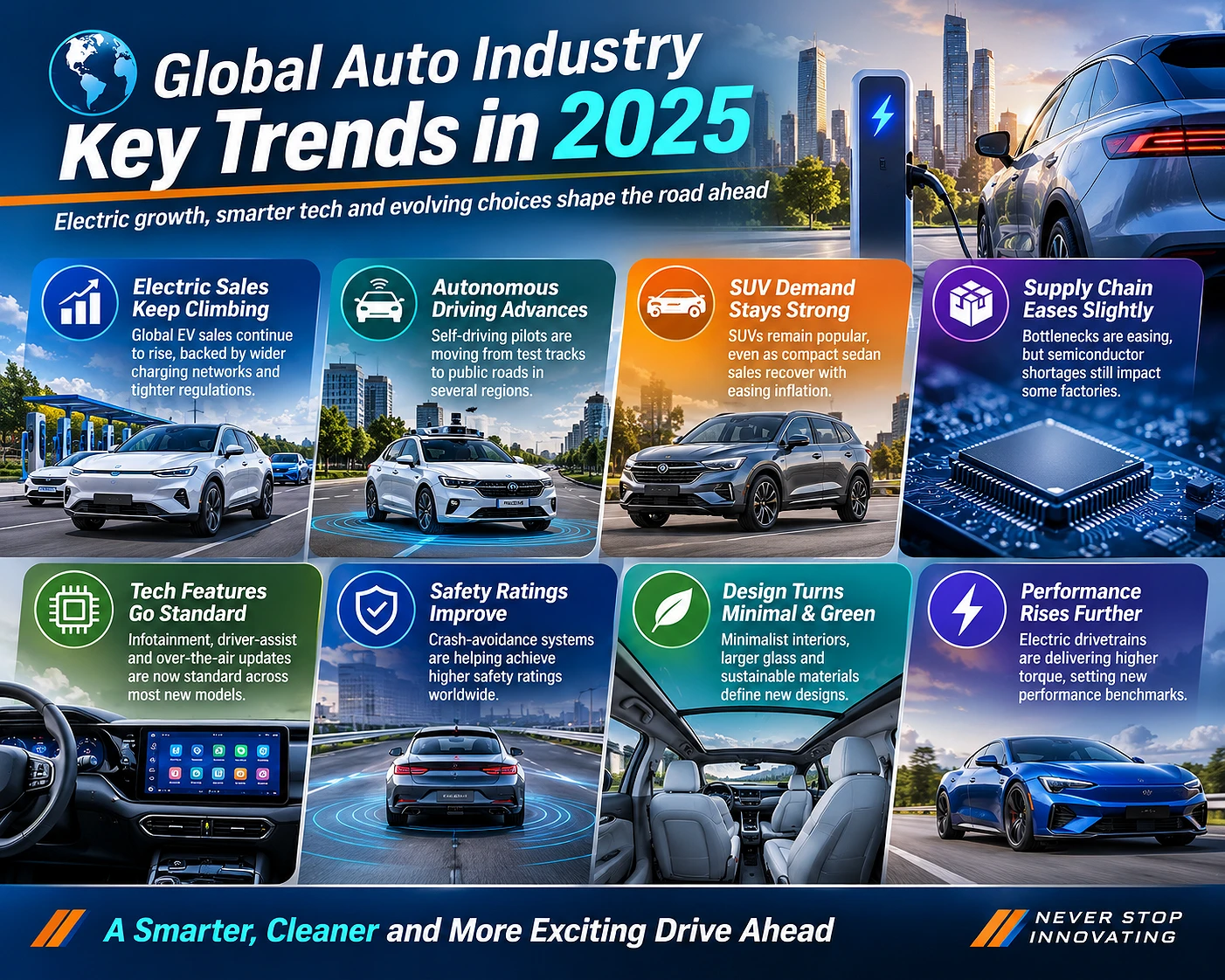
The shift toward electric propulsion is no longer a niche story. In 2026, manufacturers report a steady rise in unit sales, a trend that mirrors the growing confidence of shoppers in battery reliability. Consumers cite lower operating costs, reduced emissions, and the convenience of home‑based charging as primary motivators. While early adopters once tolerated limited range, today most new electric models comfortably exceed 300 miles per charge, a figure that eases range‑anxiety for many families.
Governments continue to tighten regulation, offering tax credits, low‑emission zones, and stricter fleet‑average standards. Those policies, combined with corporate sustainability pledges, push automakers to accelerate their electrification roadmaps. The result is a broader portfolio that includes everything from city‑centric hatchbacks to high‑performance sports coupes, each promising zero tailpipe emissions.
While fully driverless cars remain a few years away, autonomous features are becoming commonplace. Level‑2 and Level‑3 systems, adaptive cruise control, lane‑centering, automated parking, appear on a growing number of midsize and premium models. Several manufacturers have launched limited pilots that allow select drivers to hand over control on highways under specific conditions.
These pilots provide valuable data on how drivers interact with automation, helping engineers refine algorithms that detect pedestrians, cyclists, and unexpected road debris. The industry watches regulatory bodies closely; any shift in legal frameworks could either speed up or slow down broader deployment. For now, the consensus among experts is that incremental improvements, paired with public education, will pave the way for wider acceptance.
Despite rising fuel prices, SUV sales remain robust. Buyers appreciate the higher seating position, cargo flexibility, and perceived safety benefits. Automakers respond by offering more efficient powertrains, including hybrid and plug‑in variants that soften the impact of inflation on fuel budgets.
At the same time, compact sedan volumes show a modest rebound. As inflation pressures ease, urban commuters revisit the advantages of a smaller footprint, easier parking, lower insurance premiums, and often better fuel efficiency. The market now presents a clearer split: families gravitate toward crossovers, while single professionals and younger buyers lean toward nimble sedans equipped with the latest connectivity suites.
Stringent regulation on emissions and safety continues to shape product development. Crash‑test standards now require advanced occupant‑protection systems, prompting manufacturers to integrate stronger high‑strength steel and aluminum alloys without adding weight. Meanwhile, emissions caps force a rapid phase‑out of internal combustion engines in several markets, accelerating the shift to electrified powertrains.
On the supply chain front, the industry sees a gradual easing of semiconductor shortages that plagued production in previous years. However, raw‑material constraints, particularly lithium and rare‑earth elements, remain a concern for battery manufacturers. Companies are diversifying sourcing, investing in recycling, and exploring alternative chemistries to mitigate future disruptions.
A robust charging network is essential for sustaining electric adoption. Governments, utilities, and private investors pour capital into fast‑charging corridors along highways, urban fast‑charge hubs, and residential wall‑box incentives. The goal is to make charging as convenient as refueling a gasoline car.
Below is a snapshot of the three most common charging levels and their typical use cases:
| Level | Typical Power | Typical Use |
|---|---|---|
| Level 1 | 120 V, up to 2 kW | Home overnight charging, low daily mileage |
| Level 2 | 240 V, 3‑7 kW | Home or workplace charging, moderate daily travel |
| DC Fast | 400‑800 V, 50‑350 kW | Highway stops, long‑distance travel, quick top‑up |
The rollout of ultra‑fast chargers aims to cut recharge times to under 20 minutes for most long‑range models, a milestone that could reshape road‑trip planning. Partnerships between automakers and charging operators also promise seamless payment integration, allowing drivers to start a session with a single tap on the vehicle’s infotainment screen.
Today's buyers expect technology to be woven into every aspect of the driving experience. Over‑the‑air software updates now add new features months after a vehicle leaves the showroom, while advanced voice assistants enable hands‑free navigation, music selection, and climate control.
Infotainment platforms increasingly support multiple smartphone ecosystems, reducing the friction of switching devices. At the same time, manufacturers are experimenting with augmented‑reality head‑up displays that project navigation cues directly onto the windshield, enhancing safety without distracting the driver.
Looking ahead, the convergence of electric, autonomous, and connected technology will likely define the next wave of vehicle design. Interiors may become more lounge‑like as drivers spend less time actively steering, while exterior styling shifts toward aerodynamic efficiency to maximize range.
Q: How soon will fully driverless cars be available to the public? A: Most experts agree that Level‑4 autonomy, where a car can operate without driver input in defined zones, will appear in limited fleets within the next five years. Widespread consumer availability depends on regulatory approval and public trust.
Q: Are electric cars really cheaper to own than gasoline models? A: Over the life of the vehicle, electricity costs per mile are typically lower than gasoline, and maintenance expenses drop because electric drivetrains have fewer moving parts. Savings vary by local electricity rates and driving habits.
Q: What should I consider when choosing a charging solution for my home? A: Assess your daily mileage, available electrical capacity, and budget. Level‑2 chargers offer a good balance of speed and cost for most households, while Level‑1 may suffice for low‑mileage drivers.
Q: Will SUVs become more fuel‑efficient as they electrify? A: Yes. Hybrid and plug‑in versions of popular SUV models deliver markedly better fuel efficiency than their gasoline‑only counterparts, often matching or surpassing midsize sedan figures.
Q: How are manufacturers addressing battery material shortages? A: Companies are investing in recycling programs, securing long‑term mining contracts, and researching chemistries that rely less on scarce minerals. These efforts aim to stabilize supply and reduce environmental impact.
Q: Is the increased use of *technology* in cars a safety risk?** A: When designed responsibly, advanced driver‑assist systems improve safety by reacting faster than a human driver in many scenarios. However, drivers must stay engaged and understand system limitations to avoid complacency.
PREVIOUS NEWS

Nepal Auto-Trader is one-stop platform for all automotive needs. We provide unbiased and unparalleled news/reviews of all auto-motives being launched in Nepalese Auto-Industry. Find recent updates and price of bikes/cars, compare and review recently launched bikes/cars, buy/sell/trade reconditioned cars/bikes and all government news about changing rules and regulation, road safety by subscribing us.

Subscribe to our Newsletter
© Copyright 2026, Nepal Autotrader


.png)
.png)