

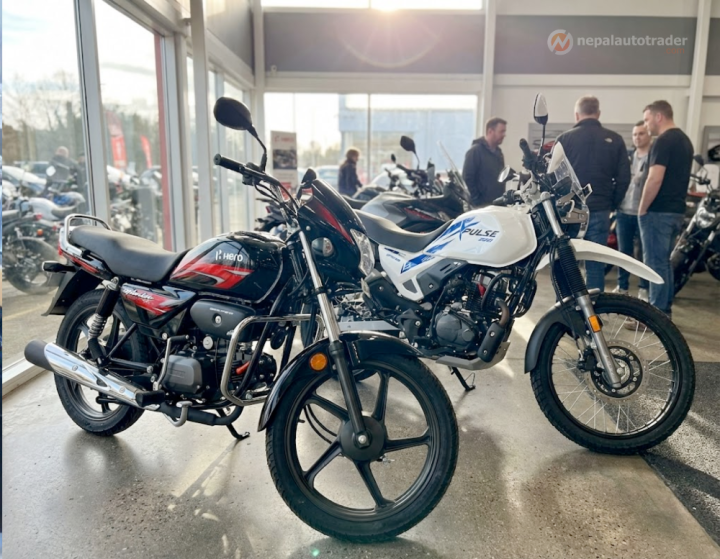
The Nepali Ministry of Physical Infrastructure and Transport announced on 9 Asar that all two‑wheelers under 250 cc must meet Euro 5‑like BS‑6 limits. The rule caps carbon‑monoxide, hydrocarbons and particulate matter far tighter than the previous BS‑4 standard. Manufacturers scrambled to certify engines, re‑tool factories and import compliant units. That matters because the compliance cost is now reflected directly on the showroom floor.
Hero’s official dealer, CG Motors, rolled out the BS‑6 variant of the Super Splendor XTEC 125 this week. The bike’s chassis, LED headlamp and Bluetooth‑enabled digital speedometer remain unchanged. Only the engine received a fresh fuel‑injection map and a revised catalytic converter. The net effect is a Rs 10,000 price increase – a figure that may look modest but represents roughly a 4 % jump for a bike that was already priced near the median of the market.
Honda’s Nepali partner mirrored the pattern with the Expols 200 Pro. The model, previously sold at Rs 5,06,900, now carries a tag of Rs 5,19,900 for the OBD‑II version. The bike retains its 199.6 cc single‑cylinder, oil‑cooled engine, twin‑disc front brakes and full LED lighting package. Power figures stay at 18.9 hp @ 8,500 rpm and 17.35 hp @ 6,500 rpm, identical to the BS‑4 predecessor. Again, the price bump is purely a compliance pass‑through.
Both motorcycles share a single‑cylinder, fuel‑injection architecture, but the displacement differs. The Splendor XTEC 125 houses a 124.7 cc engine that delivers 10.7 PS and 10.6 Nm of torque. It rides a five‑speed gearbox, a rear‑swingarm suspension and a drum‑brake rear unit. The Expols 200 Pro pushes a larger 199.6 cc block, generating roughly 18.9 hp and 17.35 hp of torque, paired with a six‑speed transmission and dual‑disc front brakes.
Both bikes now meet the stricter BS‑6 emission limits, meaning lower tailpipe smoke and better fuel economy in real‑world riding. However, the performance envelope stays the same – the upgrades are invisible to the rider except for the occasional cleaner exhaust note.
The price adjustments are not isolated events. Bajaj announced a modest Rs 5,000 rise for its Pulsar 150, while TVS kept the Star City stable, hoping to capture price‑sensitive buyers. The net result is a reshuffling of the 100‑150 cc segment, where price elasticity is high.
Dealers report that inventory turnover has slowed slightly as customers digest the new numbers. Some riders are postponing purchases, waiting to see if the market stabilises. Others are gravitating toward older, still‑available BS‑4 stock that may be cleared at a discount before it disappears entirely. That matters for cash‑flow planning at showrooms across Kathmandu, Pokhara and Biratnagar.
The BS‑6 rollout is only the first phase of a broader environmental agenda. The government has hinted at future incentives for electric two‑wheelers, and several manufacturers have already hinted at electric prototypes for the Nepali market. In the short term, we can expect more price tweaks as import duties, certification fees and supply‑chain adjustments settle.
Riders who value cleaner air and lower fuel consumption will likely welcome the compliance, even if it costs a few thousand rupees more. For the industry, the shift is a wake‑up call: invest in cleaner tech now, or risk being left behind as regulations tighten further.
The road ahead is greener, but the price tags are catching up.
Q: What is the exact price of the *BS‑6* Super Splendor XTEC 125 in Nepal? A: The BS‑6 variant is priced at Rs 2,66,900, up from the previous Rs 2,56,900.
Q: Does the *BS‑6* upgrade improve fuel economy for these bikes? A: Manufacturers claim a modest 2‑3 % improvement in real‑world mileage, mainly due to cleaner combustion and tighter engine mapping.
Q: How do these price hikes compare with competitor models like the Bajaj Pulsar 150? A: Bajaj raised its price by about Rs 5,000, roughly half the increase seen on the Splendor and less than a quarter of the Expols bump.
Q: Are there any subsidies or discounts for early adopters of *BS‑6* motorcycles? A: The Nepali government has not announced any direct subsidies yet, but some dealers offer limited‑time accessories packages to soften the impact.
Q: Will the older BS‑4 models still be sold after the compliance date? A: Existing BS‑4 stock will be cleared at discounted rates, but new sales of non‑compliant units are prohibited after the rule’s enforcement date.

Nepal Auto-Trader is one-stop platform for all automotive needs. We provide unbiased and unparalleled news/reviews of all auto-motives being launched in Nepalese Auto-Industry. Find recent updates and price of bikes/cars, compare and review recently launched bikes/cars, buy/sell/trade reconditioned cars/bikes and all government news about changing rules and regulation, road safety by subscribing us.

Subscribe to our Newsletter
© Copyright 2026, Nepal Autotrader


.png)
.png)