

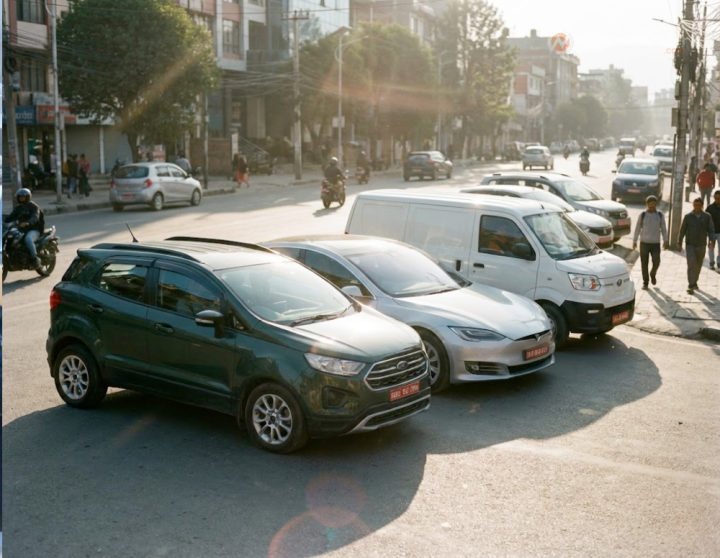
The customs data released on Wednesday paints a vivid picture of Nepal’s evolving automotive landscape. An extra 8,000 units on the road may sound modest, but in a market where total annual sales hover around 30,000, the impact is palpable. More cars mean more traffic, more emissions, and a larger tax base. That matters for policymakers juggling infrastructure upgrades and fiscal targets.
Petrol‑powered vehicles accounted for 3,199 units in the first half of the fiscal year – a 55.9% increase over the same period last year. The bulk of that growth belongs to Hyundai, which shipped 1,583 assembled units and captured 49.48% of the petrol segment. Hyundai’s advantage stems from its exclusive right to assemble four‑wheelers in Nepal, allowing it to offer locally built Kreta and Venue models at competitive prices. When a brand can sidestep import duties, the savings flow straight to the buyer, and the market responds.
Even as the overall market swelled, EV imports slipped 7.42%, falling from 5,480 units a year ago to 5,573 units this year, a modest decline that still signals a slowdown. The customs report links the dip to a stalled tax‑increase proposal that left dealers hesitant. Roughly 6,000 EVs were ordered in anticipation of higher duties, but most remain unsold on showroom floors. The data also shows a clear segmentation: 1,585 units under 50 kW, 3,017 units between 51‑100 kW, 463 units in the 101‑200 kW range, and a handful of 201 kW+ models. The market is still learning how to price higher‑capacity batteries.
Import value climbed to 15.02 billion rupees, delivering 14.7 billion rupees in government revenue. Petrol cars, despite representing a smaller share of total units, contributed a disproportionate slice of that revenue because of higher duties and luxury‑tax brackets. EVs, while growing in absolute numbers, generate less tax per vehicle due to incentives aimed at greening the fleet. The fiscal balance therefore leans heavily on the petrol segment, a fact that will shape future tax policy.
Looking ahead, two forces will shape Nepal’s auto market. First, the government is expected to finalize its budget‑year tax adjustments, which could raise duties on EVs and curb the current price advantage. Second, Hyundai’s assembly line is slated to expand capacity by 20% in the next twelve months, meaning more locally built models will flood the market. If EV incentives hold steady, the electric segment could rebound; if not, petrol dominance may persist longer than analysts forecast.
Dealers need to hedge against policy volatility. For petrol‑focused showrooms, stocking a balanced mix of Hyundai and other brands (Toyota, Mahindra) will protect against a sudden shift in consumer sentiment. EV retailers, on the other hand, should emphasize models under 50 kW, where price sensitivity is greatest, and push financing schemes that offset any tax hike. In both cases, clear communication about total cost of ownership will be a decisive factor for Nepalese buyers.
Q: What is the total number of vehicles imported in the first half of FY 2082/83? A: Customs data shows 8,272 units of cars, jeeps and vans were imported between Saun and Pous.
Q: How much did petrol car imports increase compared to last year? A: Petrol car imports rose 55.9%, adding 1,147 units to reach 3,199 units.
Q: Which brand leads the petrol car market and why? A: Hyundai leads with a 49.48% share, thanks to its exclusive local assembly of models like Kreta and Venue.
Q: Are EV imports expected to recover after the tax‑increase rumor? A: If the government maintains current incentives, the EV segment could regain momentum, especially in the sub‑50 kW bracket.
Q: What revenue did the government collect from vehicle imports? A: Import duties generated roughly 14.7 billion rupees in revenue during the six‑month period.
Q: When will Hyundai’s expanded assembly capacity be operational? A: The plant upgrade is slated for completion within the next twelve months, targeting a 20% increase in output.

Nepal Auto-Trader is one-stop platform for all automotive needs. We provide unbiased and unparalleled news/reviews of all auto-motives being launched in Nepalese Auto-Industry. Find recent updates and price of bikes/cars, compare and review recently launched bikes/cars, buy/sell/trade reconditioned cars/bikes and all government news about changing rules and regulation, road safety by subscribing us.

Subscribe to our Newsletter
© Copyright 2026, Nepal Autotrader


.png)
.png)