

27,608 total vehicles registered at Ekantakuna Office in FY 2081/82
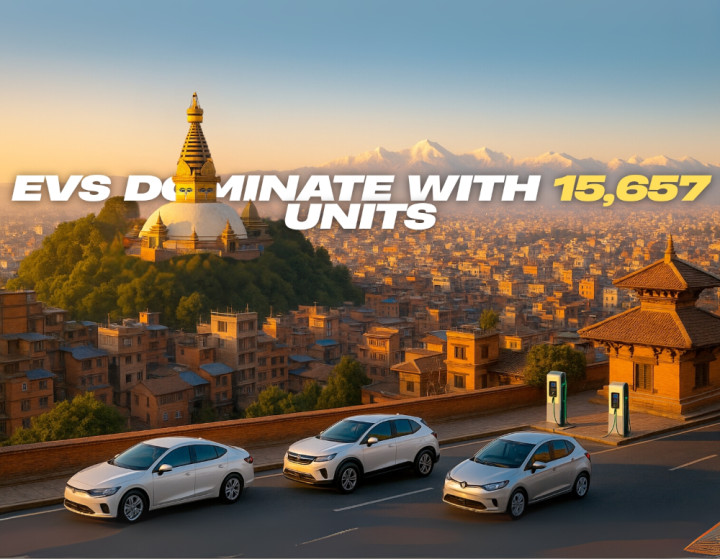
EVs dominate with 15,657 units — the most registered category
Peak registration month: Jestha (5,105 EVs)
Lowest month: Asar (just 31 EVs)
Fuel-run cars, buses, trucks, and heavy vehicles trail behind
Kathmandu’s Ekantakuna Transport Office logged 27,608 new vehicle registrations in fiscal year 2081/82, with electric vehicles (EVs) accounting for more than half the total volume.
15,657 EVs registered from Shrawan to Asar—nearly 57% of all new vehicles.
This spike highlights the city's growing push toward electric mobility, driven by lower import duties, rising fuel costs, and cleaner alternatives for daily commuting.
| Month | EVs Registered |
|---|---|
| Jestha | 5,105 |
| Asar | 31 |
The data shows a clear seasonal spike, with Jestha seeing the highest EV registrations—likely due to end-of-fiscal-year discounts or tax planning. Asar saw a major dip, possibly reflecting delayed processing or supply constraints.
Here’s how other vehicle categories performed:
| Vehicle Type | Units Registered |
|---|---|
| Electric Vehicles (EVs) | 15,657 |
| Cars / Jeeps / Vans (Petrol/Diesel) | 7,684 |
| Buses | 1,019 |
| Mini Buses / Mini Trucks | 1,507 |
| Cranes / Dozers / Excavators | 714 |
| Trucks / Tippers / Tankers | 933 |
| Micro Vehicles | 92 |
| Diplomatic Vehicles | 92 |
| Ambulance / Mortuary Vans | 2 |
Low EV import tax (as low as 10%)
Petrol vehicle import tax still over 200%
High demand for clean alternatives in a hydroelectric-powered grid
Wider EV choices from China, India, and other markets
No fuel queues and lower running costs for daily drivers
Kathmandu buyers are choosing electric over fuel not just for the environment—but also for practicality and savings.
In FY 2080/81:
Over 11,700 four-wheeler EVs were imported into Nepal
China accounted for nearly 75% of those imports
EVs now make up over 80% of new passenger vehicle sales in Nepal
Imports continue to rise with steady YoY growth
Charging infrastructure is expanding, with over 71,000 charging units imported this year alone
This isn't just a city trend—Kathmandu is leading a national shift.
More electric taxis and buses are likely in Bagmati Province
Less dependence on fuel imports and foreign oil
Lower emissions in city centers
Incentives may grow for replacing old fuel-run cars
Kathmandu’s urban design must now adapt to charging needs and parking for EVs
EVs dominate registrations in Kathmandu for FY 2081/82
Clean energy transition is real and consumer-driven
Monthly EV registration peaks show shifting momentum
Petrol cars, buses, and trucks remain—but they’re being outpaced fast
Kathmandu is becoming the testing ground for Nepal’s EV future
Kathmandu isn't just buying more EVs, it’s shaping how the rest of the country moves forward. With clean energy, tax benefits, and an expanding vehicle ecosystem, the capital is building the foundation of Nepal’s electric mobility revolution.

Nepal Auto-Trader is one-stop platform for all automotive needs. We provide unbiased and unparalleled news/reviews of all auto-motives being launched in Nepalese Auto-Industry. Find recent updates and price of bikes/cars, compare and review recently launched bikes/cars, buy/sell/trade reconditioned cars/bikes and all government news about changing rules and regulation, road safety by subscribing us.

Subscribe to our Newsletter
© Copyright 2026, Nepal Autotrader


.png)
.png)