

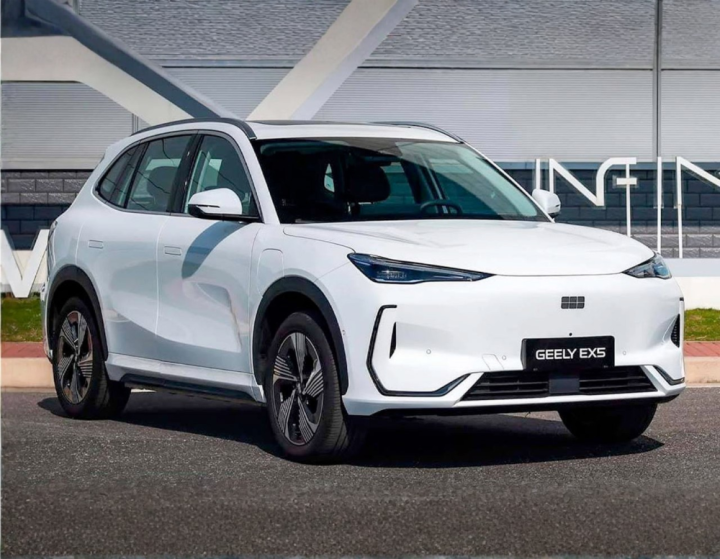
LRR Motors announced the 2026 Geely EX5 arrival just days after the new year began. In Nepal, model‑year launches usually sit around June or July, when import paperwork and homologation settle. This time, LRR cut through the red‑tape, coordinating with the factory and customs to land the cars within the first thirty days of 2026. That matters because early adopters can lock in the freshest tech without waiting for a mid‑year scramble.
The decision is also a strategic play. By being first with a modern electric vehicle, LRR positions itself as the go‑to EV specialist. It signals confidence in the supply chain, and it forces competitors to accelerate their own timelines. The early launch is a statement: Nepal’s EV market is no longer a waiting room.
The Geely EX5 isn’t just another electric hatchback. It arrives with a suite of features that raise the bar for the local market. The cabin showcases a 12.3‑inch digital instrument cluster, a 15.6‑inch central infotainment screen, and a voice‑activated AI assistant that learns driver habits. Climate control is dual‑zone, and a panoramic sunroof adds a sense of space.
Safety is front‑and‑center. The EX5 carries a full complement of six airbags, electronic stability control, lane‑keeping assist, and a 360‑degree camera system. Geely’s proprietary “Smart Drive” suite adds adaptive cruise control and automatic emergency braking. Those systems, once reserved for premium imports, now sit in a vehicle priced under NPR 7 million. That changes things for the average Nepali driver.
Under the hood sits a permanent‑magnet synchronous motor rated at 150 kW (201 hp) and 310 Nm of torque. The motor delivers instant pull, making 0‑100 km/h achievable in 7.8 seconds. While not a hypercar, those numbers feel lively on Kathmandu’s winding streets.
The 66 kWh lithium‑ion battery is positioned under the floor, preserving a low centre of gravity. Geely’s Battery Management System (BMS) monitors cell health in real time, extending longevity to an estimated 1,500 full cycles before capacity drops below 80 %. The WLTP‑rated range of 450 km translates to roughly 280 km in the hilly terrain around Pokhara, a realistic figure for daily commutes.
Charging is flexible. A 7.2 kW AC home charger tops up the pack overnight, while a 150 kW DC fast‑charger restores 80 % in about 30 minutes. LRR Motors is already installing fast‑charging stations at major malls in Kathmandu and Biratnagar, a move that eases range anxiety for early buyers. That matters for anyone still skeptical about EV practicality.
The base EX5 Standard starts at NPR 5.99 million. It includes the motor, battery, and a modest set of driver‑assist features. The EX5 Premium bumps the price to NPR 6.49 million, adding the panoramic roof, upgraded leather upholstery, and a 12‑speaker sound system. Both trims receive a three‑year or 80 000 km warranty, whichever comes first.
Pre‑orders opened on January 5, 2026, with a deposit of NPR 150 000. Deliveries began on January 28, and LRR expects to ship 200 units per month through its network of ten authorized dealers. The company has pledged to expand to fifteen dealers by Q3 2026, covering major cities like Kathmandu, Pokhara, Biratnagar, and Dharan. That ensures the vehicle is not a boutique item but a mainstream choice.
The Geely EX5 now sits ahead of the Toyota Corolla Hybrid EV, slated for a July 2026 debut, and the Hyundai Ioniq 5, expected in September 2026. Early market entry gives Geely a head start on brand awareness, dealer familiarity, and real‑world data collection.
For consumers, the advantage is clear: the first‑mover can lock in lower financing rates, benefit from introductory service packages, and enjoy higher resale values as the market matures. For rivals, the pressure is immediate. They must either accelerate their own launches or differentiate with unique features, perhaps longer range or higher performance.
LRR Motors also leverages the early launch to negotiate better terms with the government’s EV incentive program. By meeting the rollout deadline for the “Zero Emission Vehicle” subsidy, early buyers qualify for a NPR 300 000 rebate, effectively lowering the entry price to NPR 5.69 million for the Standard trim. That changes the economics for many families.
The ripple effect could be profound. A surge in EV adoption accelerates the need for charging infrastructure, prompting utilities and private investors to pour capital into the grid. It also nudges policy makers to refine tax breaks and import duties, shaping Nepal’s broader sustainability agenda.
Looking ahead, LRR Motors plans to introduce a long‑range variant with a 77 kWh pack by late 2026, targeting a 550 km WLTP range. A sport‑tuned version, the EX5 RS, is rumored to deliver 180 kW and a 0‑100 km/h time under 6.5 seconds, appealing to enthusiasts.
Beyond product extensions, the distributor is eyeing a partnership with Ncell to bundle home‑charging installations with mobile data plans, creating a seamless ownership experience. If those plans materialize, Nepal could see a 10 % increase in EV registrations by the end of 2027.
The early arrival of the 2026 Geely EX5 is more than a calendar tweak; it’s a catalyst for change. It forces the market to confront EV realities now, rather than later. For buyers, it offers a tangible taste of the electric future. For the industry, it sets a new benchmark of speed and ambition.
Q: What is the official range of the 2026 Geely EX5 in Nepal? A: Geely rates the EX5 at 450 km WLTP, which translates to about 280 km in typical Nepali driving conditions.
Q: When will the long‑range 77 kWh battery version be available? A: LRR Motors expects to launch the extended‑range model in late 2026, with deliveries starting early 2027.
Q: How much does the government rebate reduce the price? A: The NPR 300 000 rebate brings the Standard trim’s effective price down to NPR 5.69 million.
Q: Which charging options are supported by the EX5? A: The EX5 supports a 7.2 kW AC home charger and a 150 kW DC fast‑charger, achieving 80 % charge in roughly 30 minutes.
Q: Are there any differences between the Standard and Premium trims? A: The Premium adds a panoramic roof, leather seats, a 12‑speaker audio system, and advanced driver‑assist features not found on the Standard.
Q: How does the EX5 compare to the upcoming Toyota Corolla Hybrid EV? A: The EX5 offers a longer electric‑only range (450 km vs. 350 km projected for the Corolla), faster DC charging, and a lower entry price, giving it a competitive edge in the early market.

Nepal Auto-Trader is one-stop platform for all automotive needs. We provide unbiased and unparalleled news/reviews of all auto-motives being launched in Nepalese Auto-Industry. Find recent updates and price of bikes/cars, compare and review recently launched bikes/cars, buy/sell/trade reconditioned cars/bikes and all government news about changing rules and regulation, road safety by subscribing us.

Subscribe to our Newsletter
© Copyright 2026, Nepal Autotrader


.png)
.png)