

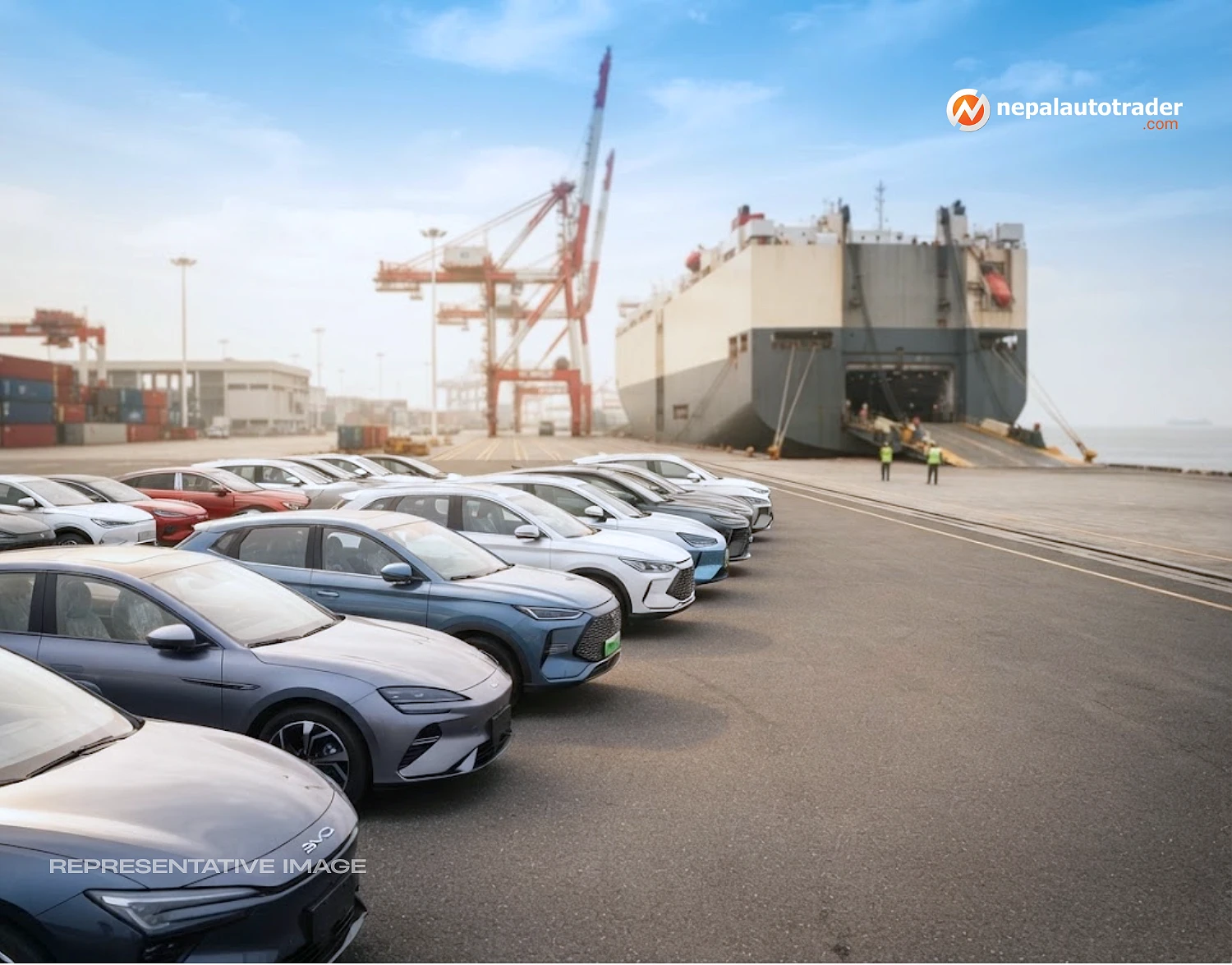
Chinese electric vehicles have become a familiar sight on Nepal's roads. Their appeal is easy to understand. Buyers have more choices, electric SUVs have become increasingly visible, and competition between brands gives customers reasons to compare prices and features closely.
Now, a change in China's export tax policy has raised a question for Nepal's EV market. Could Chinese electric cars become more expensive?
China announced on October 12, 2026, that it would reduce the value-added tax export rebate for new energy vehicles from 13% to 9% from April 1, 2027. The decision changes the financial support available to eligible exporters. It does not, however, announce a price increase for vehicles sold in Nepal. Reuters reported the policy announcement, while China's tax authorities published the official notice.
The policy was announced jointly by China's Ministry of Finance and the State Taxation Administration. It forms part of a wider adjustment to export tax rebate arrangements for selected products.
For new energy vehicles, the headline change is a four percentage point reduction in the VAT export rebate. The new rate will apply from April 1, 2027, based on the export date recorded on the relevant customs declaration.
| Policy detail | Confirmed information |
|---|---|
| Announcement date | October 12, 2026 |
| Previous rebate rate | 13% |
| New rebate rate | 9% |
| Effective date | April 1, 2027 |
| Change | Reduction of 4 percentage points |
| Issuing authorities | Ministry of Finance and State Taxation Administration |
There is an important distinction here. The rebate reduction is not the same as an increase in the VAT rate charged to Nepalese car buyers. It changes the export tax rebate available under China's policy, affecting the economics of eligible vehicle exports.
The notice also cancels VAT export rebates for specified e-cigarette devices and related products from the same date. Export consumption tax arrangements for products covered by that part of the announcement remain unchanged.
For car buyers, the immediate takeaway is simple. The new EV rebate rate is scheduled to take effect in 2027, not immediately following the announcement.
Export rebates can influence the economics of manufacturing and selling products abroad. When an exporter receives a rebate, it can help offset costs and support the final commercial calculation. Reducing that support may leave a manufacturer with less room to absorb other expenses or protect its margins.
The effect will not necessarily be identical across China's automotive industry. Companies have different cost structures, export strategies, product mixes and pricing policies. Some may absorb part of the change, while others could look for savings elsewhere or reconsider export prices.
The pressure is especially relevant as Chinese manufacturers expand their international reach. Competition between brands is already intense, and overseas markets provide opportunities for companies seeking growth beyond their domestic customer base. Reuters has reported on the growing importance of Chinese vehicle exports and the commercial challenges facing manufacturers operating in an increasingly competitive global market.
Three possible responses deserve attention:
These are possible responses, not confirmed decisions by any particular automaker. The policy announcement does not establish which approach individual manufacturers will take.
That uncertainty is central to the story. A reduction in tax support creates pressure, but the market response will depend on how companies choose to manage it.
Nepal is an important market to watch because Chinese electric vehicle brands have established a visible presence here. Buyers can compare models across several price points, and the choice increasingly extends beyond a handful of early EV offerings.
If a manufacturer raises the export price of a vehicle, the Nepalese importer may face a higher acquisition cost. Depending on the commercial agreement, the importer could absorb some of that increase, negotiate with the manufacturer or pass some of the cost on to customers.
But the rebate change alone does not tell us how much any particular car might cost. The final retail price will depend on several factors, including the manufacturer's export pricing, shipping and logistics expenses, distributor margins, competing models and Nepal's own tax arrangements.
| Factor | Possible effect in Nepal | What remains unknown |
|---|---|---|
| Manufacturer pricing | Higher export prices could raise importer costs. | Whether individual brands will change prices. |
| Importer margins | Distributors could absorb some of the pressure. | How commercial agreements will respond. |
| Competition | Rival brands could limit price increases. | How competitors will set future prices. |
| Nepal's tax policy | Local taxes will continue to influence final retail prices. | Any separate future policy changes. |
There is no confirmed price increase for either model in the announcement. Any claim that a particular vehicle will become more expensive by a specific amount would be premature without further pricing information.
The period before April 2027 gives manufacturers and distributors time to assess the change. It does not guarantee that prices will remain unchanged until then, nor does it mean that increases will occur once the new rebate rate takes effect.
For customers planning to buy an EV, there is no reason to make a rushed decision based on this announcement alone. The more useful approach is to compare current offers and monitor any formal price notices from distributors.
Keep an eye on these developments:
The policy could ultimately reshape some manufacturers' export calculations, but it is too early to predict its full effect on Nepal's retail market. The most useful signal will be what automakers and distributors actually do, not the rebate percentage in isolation.
Q: What has China changed in its EV export tax policy?
A: China will reduce the VAT export rebate for eligible new energy vehicles from 13% to 9%. The new rate takes effect on April 1, 2027.
Q: When was the new policy announced?
A: China's Ministry of Finance and the State Taxation Administration announced the change on October 12, 2026. The policy applies according to the export date recorded on the customs declaration.
Q: Will Chinese EV prices definitely increase in Nepal?
A: No price increase in Nepal has been confirmed by this announcement. Prices could face upward pressure if manufacturers raise export prices, but the final outcome will depend on automaker decisions, importer margins and competition.
Q: Does the rebate reduction mean Chinese EVs will cost 4% more?
A: No. The policy reduces the rebate rate by four percentage points, from 13% to 9%. It does not establish a corresponding percentage increase in the final retail price of an electric vehicle.
Q: Which Chinese EV brands in Nepal could be affected?
A: The potential impact depends on whether a vehicle is covered by the official policy and how its manufacturer handles the change. Buyers should look for confirmed price announcements rather than assume that every Chinese EV will receive the same price adjustment.
Q: Should buyers purchase a Chinese EV before April 2027?
A: The announcement alone is not a reason to rush into a purchase. Buyers should compare current prices, features, warranties, charging needs and ownership costs, then reassess their options if distributors announce changes.

Nepal Auto-Trader is one-stop platform for all automotive needs. We provide unbiased and unparalleled news/reviews of all auto-motives being launched in Nepalese Auto-Industry. Find recent updates and price of bikes/cars, compare and review recently launched bikes/cars, buy/sell/trade reconditioned cars/bikes and all government news about changing rules and regulation, road safety by subscribing us.

Subscribe to our Newsletter
© Copyright 2026, Nepal Autotrader


.png)
.png)