

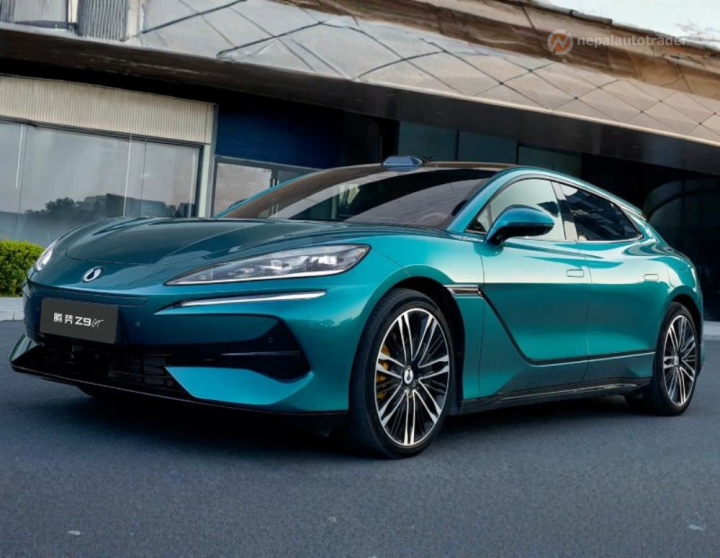
The Chinese giant BYD has just dropped a bombshell on the global EV stage. Its newest premium offering, the Denza Z9 GT, promises a 1,036 km CLTC range – a figure no other production EV has officially posted. That matters because range anxiety has been the biggest hurdle for Nepalese buyers, especially on the country’s rugged highway network.
The model rolls out in five variants, all built on the same rear‑wheel‑drive, single‑motor platform. The powertrain is modest on paper but the real story is the energy density of the Blade battery 2.0. BYD claims the pack can store enough juice to keep the car cruising for over a thousand kilometres before a recharge. If the numbers hold up, the Z9 GT will eclipse the Tesla Model S Long Range by more than 150 km.
BYD has kept the drivetrain simple: a permanent‑magnet synchronous motor mounted at the rear, delivering 150 kW (≈ 201 hp) and 310 Nm of torque. The motor spins the rear wheels directly, offering a smooth, quiet acceleration curve that feels more like a glide than a launch.
The heart of the range claim is the Blade battery 2.0, a lithium‑iron‑phosphate (LFP) pack that BYD says is the most space‑efficient in its class. The battery is integrated into the floor pan, lowering the centre of gravity and freeing up cabin volume. The company also touts a fast‑charging capability of 80 % in 30 minutes on a 250 kW DC charger – a practical figure for long‑distance trips across the Himalayas.
| Specification | Value |
|---|---|
| Motor layout | Single‑motor rear‑wheel drive |
| Power output | 150 kW (201 hp) |
| Torque | 310 Nm |
| Battery type | Blade battery 2.0 (LFP) |
| Usable capacity | Approx. 84 kWh |
| CLTC range | 1,036 km |
| Fast‑charge (0‑80 %) | 30 minutes @ 250 kW |
The interior has been completely overhauled. A new column shifter replaces the traditional centre console lever, freeing up space for a three‑screen layout that spans the driver’s instrument cluster, a central infotainment panel, and a passenger‑side display. All screens run BYD’s latest DiLink OS, supporting over‑the‑air updates and seamless smartphone integration.
Lighting has been upgraded to dynamic ambient lighting that shifts hue based on driving mode. The carbon‑fiber interior package adds a tactile, high‑tech feel, while the diamond‑quilted stitching on the seats gives a nod to luxury. Other highlights include:
These details push the Z9 GT into the premium EV segment, directly challenging the Mercedes‑EQE and Audi e‑trons that have been eye‑candy in Kathmandu’s showrooms.
BYD has announced a clear pricing ladder. The entry‑level Standard trim starts at $39,100, while the top‑end Executive version tops out at $53,600. All variants share the same battery and motor; the price gap is driven by interior finishes, wheel designs and the inclusion of optional driver‑assist packages.
| Trim | Price (USD) | Key features |
|---|---|---|
| Standard | $39,100 | Blade battery 2.0, single‑motor RWD, basic interior |
| Comfort | $43,200 | Upgraded upholstery, 18‑inch alloy wheels, ambient lighting |
| Sport | $47,500 | Sports steering wheel, paddle shifters, larger brakes |
| Luxury | $51,300 | Carbon‑fiber interior package, three‑screen cockpit |
| Executive | $53,600 | Diamond‑quilted seats, premium sound system, full driver‑assist |
The price positioning slots the Z9 GT between the Tesla Model 3 (starting around $42,000) and the Hyundai Ioniq 6 (around $45,000) in Nepal. BYD’s claim of the longest range gives it a unique selling point that could sway buyers who prioritize distance over brand prestige.
NEPAL’s EV policy has been gradually tightening, with incentives for battery‑electric vehicles and a growing network of fast chargers along the Prithvi Highway and Araniko Highway. The arrival of a vehicle that can theoretically cover the Kathmandu‑Pokhara corridor without a stop could accelerate dealer confidence and consumer adoption.
The Z9 GT also showcases BYD’s variable‑flux motor technology, which the company recently patented. That innovation promises higher efficiency and lower heat generation, a benefit that could translate into even longer real‑world ranges.
If BYD can deliver on its range promise, the brand may become the go‑to choice for fleet operators, ride‑hailing services, and long‑haul logistics firms that have been hesitant to switch from diesel. The 30‑year anniversary delivery of 100 units earlier this year showed BYD’s commitment to the Nepali market; the Z9 GT could be the next leap forward.
In short, the Denza Z9 GT is more than a new model – it’s a statement that range limits are being rewritten. That changes things for anyone watching Nepal’s EV rollout with a mix of optimism and caution.
Q: What is the exact range of the Denza Z9 GT under CLTC testing? A: BYD advertises a 1,036 km range on the CLTC cycle, the longest claimed for any production electric car.
Q: Which trims are available and how do they differ? A: Five trims – Standard, Comfort, Sport, Luxury and Executive – share the same powertrain but differ in interior materials, wheel size and driver‑assist features. Prices run from $39,100 to $53,600.
Q: When will the Z9 GT be available for purchase in Nepal? A: BYD plans to begin deliveries in Q3 2024 after a limited pre‑order window that opened in early 2024.
Q: How fast can the battery be charged? A: The Blade battery 2.0 supports 80 % charge in 30 minutes on a 250 kW DC fast charger.
Q: How does the Z9 GT compare to the Tesla Model S Long Range? A: The Z9 GT offers a higher CLTC range (1,036 km vs. 900 km EPA) but lower peak power (150 kW vs. 350 kW). Pricing is also more competitive for the Nepali market.
Q: Are there any government incentives for buying this EV? A: Nepal’s current EV policy provides a 30 % import duty reduction and exemption from road tax for battery‑electric vehicles, applicable to the Z9 GT.
PREVIOUS NEWS

Nepal Auto-Trader is one-stop platform for all automotive needs. We provide unbiased and unparalleled news/reviews of all auto-motives being launched in Nepalese Auto-Industry. Find recent updates and price of bikes/cars, compare and review recently launched bikes/cars, buy/sell/trade reconditioned cars/bikes and all government news about changing rules and regulation, road safety by subscribing us.

Subscribe to our Newsletter
© Copyright 2026, Nepal Autotrader


.png)
.png)