

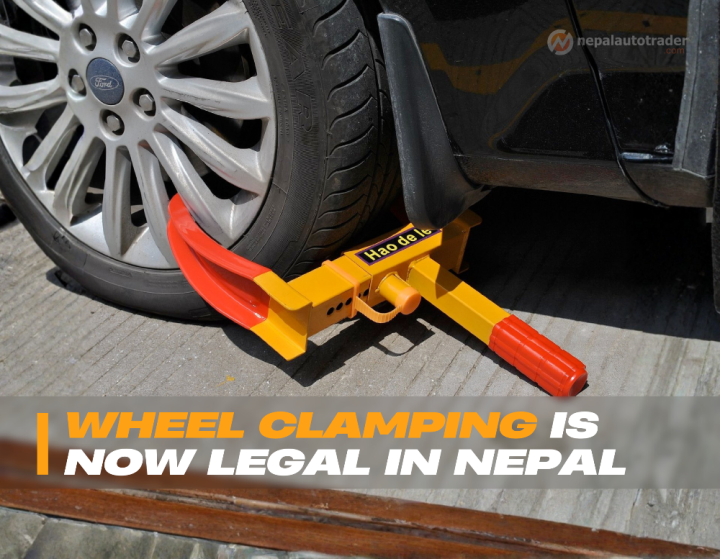
Patan High Court confirms wheel locking by traffic authorities is legal
Practice ensures smooth traffic management and public safety
Vehicle owners must follow parking rules to avoid penalties
Procedural safeguards protect citizen rights and prevent misuse
The Patan High Court recently ruled that wheel locking by municipal and traffic police in Nepal is legally valid. This decision came after a petition challenged the authority of law enforcement to immobilize vehicles. The court confirmed that wheel locks serve as a necessary tool for maintaining order and public convenience.
Wheel locking is recognized as a practical solution for traffic management. Key reasons include
Preventing obstruction on busy roads
Ensuring emergency vehicles have clear access
Encouraging compliance with parking regulations
Reducing public inconvenience caused by illegal parking
The court clarified that wheel locking is a controlled and temporary measure that does not damage vehicles or infringe citizen rights.
Authorities must follow clear procedures when applying wheel locks:
| Step | Procedure | Purpose |
|---|---|---|
| 1 | Identify illegally parked vehicle | Ensure vehicle is obstructing traffic or parked in prohibited area |
| 2 | Install wheel lock | Temporarily immobilize vehicle without causing damage |
| 3 | Notify vehicle owner | Provide opportunity to contact authorities |
| 4 | Remove lock upon compliance | Return vehicle access and enforce fines if applicable |
This process ensures that wheel locking remains fair, transparent, and legally compliant.
Vehicle owners in Nepal should understand the following points to avoid penalties
Parking in restricted areas may result in immediate wheel locking
Locks are temporary and removed once the owner contacts authorities
Fines may be imposed according to traffic laws
Following parking regulations ensures uninterrupted mobility
Wheel locking serves multiple purposes beyond law enforcement:
Maintains smooth traffic flow in congested areas
Protects public safety and access for emergency services
Encourages responsible parking behavior
Provides clear legal backing for municipal and traffic authorities
The Patan High Court verdict confirms that wheel locking is a legitimate and legal practice in Nepal. It balances public safety, traffic management, and citizen rights while providing clear procedural safeguards. Following parking rules is essential for vehicle owners to avoid fines and unnecessary inconvenience.
Summary Table of Key Points
| Topic | Details |
|---|---|
| Court | Patan High Court |
| Practice | Wheel locking by traffic authorities |
| Legal Status | Confirmed as legal |
| Purpose | Traffic management, public safety |
| Owner Rights | Lock removed immediately upon contact; fines enforced |
This ruling establishes wheel locking as a practical tool for lawful traffic enforcement in Nepal while protecting citizen rights and ensuring efficient road use.

Nepal Auto-Trader is one-stop platform for all automotive needs. We provide unbiased and unparalleled news/reviews of all auto-motives being launched in Nepalese Auto-Industry. Find recent updates and price of bikes/cars, compare and review recently launched bikes/cars, buy/sell/trade reconditioned cars/bikes and all government news about changing rules and regulation, road safety by subscribing us.

Subscribe to our Newsletter
© Copyright 2026, Nepal Autotrader


.png)
.png)