

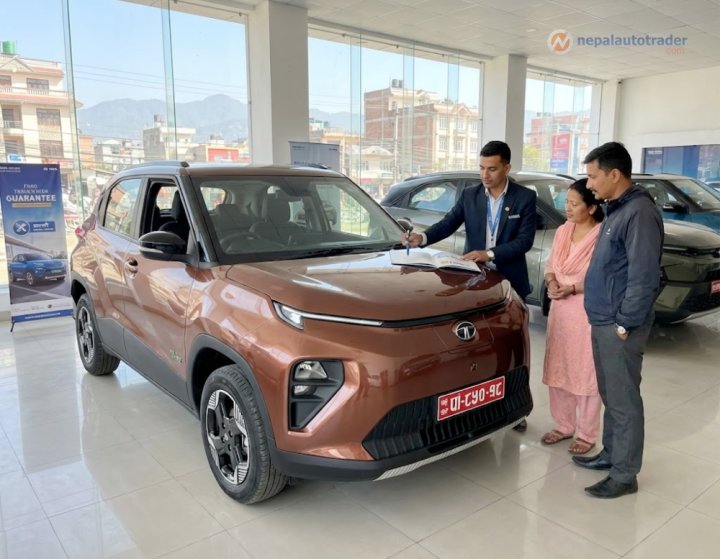
Sipradi Trading, the authorised distributor for Tata Motors in Kathmandu, unveiled a limited‑time resale scheme on 7 magh 2082 (February 2024). The dealer will honour a 70 percent resale guarantee for any Tata Punch EV bought within the month. In plain terms, if a buyer decides to swap the vehicle for another model later, Sipradi will pay back 70 % of the original invoice price, regardless of market depreciation.
The announcement was made at the brand’s flagship showroom on Buddhanagar, with senior executives stressing that the plan is meant to “remove the fear of low‑value residuals that often stalls EV purchases”.
That matters because resale anxiety is a documented barrier in Nepal’s nascent electric‑vehicle ecosystem. By offering a safety net, Sipradi hopes to convert hesitant shoppers into early adopters.
The scheme is straightforward, yet it carries a few fine‑print conditions. Below is a quick‑reference table that breaks down the mechanics:
| Aspect | Detail | Notes |
|---|---|---|
| Eligibility | Any new **Tata Punch EV** purchased between 1 Feb 2024 and 29 Feb 2024 | Must be registered in the buyer’s name |
| Resale Window | Up to 24 months from the original sale date | Buyer must submit a written trade‑in request |
| Guarantee Value | 70 % of the original invoice price | Based on the price at the time of purchase, not market value |
| Exclusions | Accidents, major modifications, or unauthorized repairs | Vehicle must pass a standard inspection |
| Processing Time | Maximum 15 business days after inspection approval | Funds transferred directly to the buyer’s bank account |
A few bullet points summarise the buyer’s responsibilities:
If those boxes are ticked, the owner walks away with a sizable cash back, effectively lowering the total cost of ownership.
Resale risk is a silent deterrent for many Nepali motorists. The country’s electric vehicle market is still under‑penetrated, and the secondary‑hand segment is fragmented. When a buyer worries that a future trade‑in will fetch only a fraction of the purchase price, the perceived financial risk balloons.
By guaranteeing 70 % resale value, Sipradi is sending a clear signal: the Tata Punch EV is not a speculative gamble, it is a durable asset. That matters for two reasons. First, it aligns with the government’s push for greener mobility by making EVs financially palatable. Second, it pressures rivals to consider similar programmes, potentially reshaping the whole resale landscape.
The Nepal market recorded a 38 % year‑on‑year increase in EV registrations during 2023, according to the Ministry of Industry, Commerce and Supplies. Yet, the overall share remains below 5 % of total vehicle sales. Consumers cite high upfront cost and uncertain resale as primary hurdles.
Tata’s Punch EV competes directly with the Mahindra eKUV100, priced roughly NPR 3.2 million, and the Hyundai Kona Electric, which starts at NPR 5.5 million. While the Punch offers a modest 81 kW motor and a 21 kWh battery, its compact dimensions and low price point (around NPR 2.9 million) make it attractive for city driving.
A simple comparison table highlights the key differences:
| Model | Power (kW) | Battery (kWh) | Starting Price (NPR) |
|---|---|---|---|
| Tata Punch EV | 81 | 21 | 2,900,000 |
| Mahindra eKUV100 | 71 | 15.9 | 3,200,000 |
| Hyundai Kona Electric | 150 | 39.2 | 5,500,000 |
The Punch EV’s lower price, combined with the resale safety net, could tip price‑sensitive buyers away from the more powerful but costlier Kona. Analysts from KPMG Nepal note that a well‑structured guarantee can shave up to 10 % off the perceived total cost of ownership, a margin that often decides purchase intent.
Sipradi has already stocked promotional material across its 12 showrooms, from Bhatbhateni Mall to the Patan outlet. Prospective owners can walk in, test‑drive the Punch EV, and receive a printed guarantee booklet that outlines the exact steps for a future trade‑in.
The dealer also hinted at a possible extension of the programme if uptake exceeds expectations. “We are monitoring the response closely,” said the regional manager. “Our goal is to create a virtuous cycle: more buyers → higher resale activity → stronger market confidence → even more buyers.”
If the scheme proves popular, it could set a precedent for other brands to launch similar offers, effectively raising the baseline resale value for EVs across Nepal. That would be a win for consumers, manufacturers, and the environment alike.
Q: Which variants of the Tata Punch EV are covered by the 70 % resale guarantee? A: All standard trims released in February 2024 are eligible, including the base model and the higher‑spec ‘X‑Line’ version. No special editions are excluded.
Q: How is the guaranteed amount calculated? A: The guarantee is 70 % of the original invoice price paid at purchase, not the market‑determined resale price.
Q: Can I claim the guarantee if I sell the car privately? A: The guarantee only applies when the vehicle is traded back to Sipradi Trading or an authorised Tata dealer. Private sales are outside the scheme.
Q: What happens if the battery is degraded beyond the warranty limit? A: The vehicle must still meet the minimum 30 % charge requirement and pass a standard inspection. Battery health beyond the warranty does not invalidate the guarantee, but major faults could.
Q: Is the guarantee transferable to a new owner? A: No, the guarantee is personal to the original purchaser and is tied to the registration details at the time of sale.
Q: Where can I find the full terms and conditions? A: Detailed terms are available at any Sipradi Trading showroom, on the official Tata Nepal website, and in the printed booklet provided at the point of sale.

Nepal Auto-Trader is one-stop platform for all automotive needs. We provide unbiased and unparalleled news/reviews of all auto-motives being launched in Nepalese Auto-Industry. Find recent updates and price of bikes/cars, compare and review recently launched bikes/cars, buy/sell/trade reconditioned cars/bikes and all government news about changing rules and regulation, road safety by subscribing us.

Subscribe to our Newsletter
© Copyright 2026, Nepal Autotrader


.png)
.png)