

Solid-state batteries have spent years being described as the next major step for electric vehicles. The promise is compelling: more energy in less space, improved safety and potentially longer-lasting battery packs. The problem has always been getting the technology out of the laboratory and into vehicles.
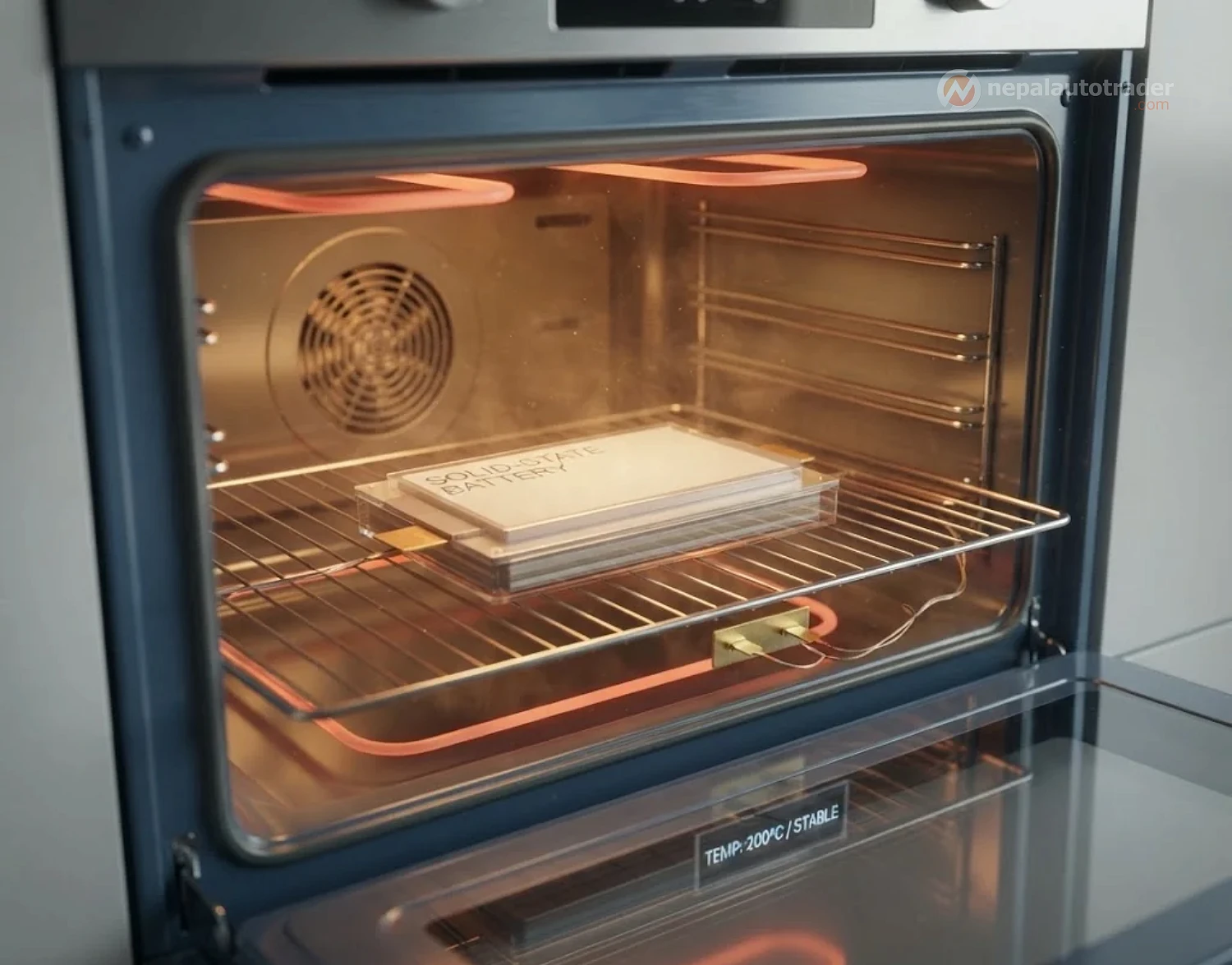
Chinese battery manufacturer Sunwoda has now reported another encouraging result. Its Xin Bixiao solid-state battery cell reportedly survived exposure to temperatures of 200°C without catching fire or exploding. That is a meaningful safety milestone, particularly when considered alongside the company's reported energy density and cycle-life figures.
However, there is an important distinction between a successful laboratory cell and a production-ready electric car battery. Sunwoda has made progress, but the technology still has several hurdles to clear.
The latest development was disclosed by Sunwoda Electric Vehicle Battery (SEVB), the company's automotive battery division. In an October 30 response published on the Shenzhen Stock Exchange investor platform, the company confirmed that its 20 Ah Xin Bixiao cell had passed a high-temperature hot-box test.
During the test, the battery was heated to 200°C (392°F). According to Sunwoda, it neither caught fire nor exploded. These results are particularly relevant because thermal safety remains one of the central engineering challenges facing high-energy-density batteries.
The company also reported that the cell has completed design and process verification. It is now being evaluated by automotive manufacturers, although Sunwoda has not disclosed the names of those companies or confirmed which vehicle programmes might use the technology.
Customer testing reportedly began in May 2026. The latest announcement therefore represents progress beyond an initial laboratory concept, although it does not establish that commercial vehicle integration is complete.
For EV manufacturers, the attraction is obvious. A battery that combines higher energy density with improved resistance to thermal incidents could offer engineers more flexibility when developing future electric vehicles.
One detail makes this development particularly interesting. Sunwoda is pursuing a different solid-electrolyte approach from the sulfide-based chemistry being developed by competitors such as CATL.
The Xin Bixiao cell uses a polymer-composite electrolyte. Its construction combines a 12-micron polymer-composite membrane with a nanoscale high-entropy silicon anode. Sunwoda says the battery achieves its reported cycle-life performance under external pressure below 1 MPa.
That pressure requirement matters more than it might initially appear. Solid-state battery materials can expand and contract during charging and discharging. Maintaining effective contact between the electrolyte and electrodes throughout these changes is a difficult engineering task.
Some sulfide-based designs require continuous mechanical pressure to maintain this contact. Sulfide materials also present manufacturing challenges because they can react with moisture and potentially release toxic hydrogen sulfide gas.
Sunwoda's polymer-composite approach offers an alternative route. However, the reported results do not establish that its chemistry is universally safer, cheaper or easier to manufacture than competing solid-state technologies. Those comparisons will require independent testing and production-scale evidence.
| Battery characteristic | Reported specification |
|---|---|
| Battery model | Xin Bixiao |
| Cell capacity | 20 Ah |
| Energy density | More than 400 Wh/kg |
| Heat-test temperature | 200°C (392°F) |
| Cycle life | More than 1,200 cycles |
| Capacity retention | More than 80% after 1,200 cycles |
| Electrolyte | Polymer-composite |
| Membrane thickness | 12 microns |
| External pressure | Below 1 MPa |
There is also an interesting longevity claim. Sunwoda estimates that maintaining more than 80% capacity after 1,200 cycles could translate into over a decade of use for a driver travelling approximately 20,000 km annually. This is the company's estimate, not a verified real-world vehicle durability result.
Energy density is where the Xin Bixiao technology could become especially attractive. Sunwoda says its cell exceeds 400 Wh/kg, a figure associated by the company with the potential for electric vehicles offering more than 1,000 km of range.
That figure needs careful interpretation. It is not a confirmed driving range for an existing Sunwoda-powered production vehicle. Actual range depends on the complete battery pack, vehicle weight, aerodynamics, motor efficiency, driving conditions and usable battery capacity.
Cell-level energy density also differs from pack-level energy density. Battery modules, cooling systems, structural components and protective electronics all add weight. Consequently, a vehicle cannot simply translate a cell's laboratory specification into an equivalent real-world driving range.
Still, the potential is significant. Higher energy density could allow manufacturers to build lighter battery packs or increase usable capacity without dramatically increasing vehicle weight. Either outcome would be valuable as electric vehicles become larger, heavier and more demanding in terms of range.
The more immediate challenge is manufacturing. SEVB has connected a pilot production line with an annual design capacity of 0.2 GWh. The company estimates that this capacity could support approximately 2,600 to 2,700 electric cars annually.
That is a pilot-scale operation, not the kind of production infrastructure needed to supply a major global vehicle manufacturer. Moving from this stage to mass production will require consistent manufacturing quality, competitive costs and successful validation in complete battery packs.
Sunwoda is entering an increasingly competitive field. China's battery manufacturers are investing heavily in next-generation chemistry, with CATL among the most closely watched companies.
On October 27, CATL reaffirmed its target of beginning small-batch production of sulfide-based solid-state battery cells in 2027. Sunwoda's polymer-composite approach provides a different technical direction in a market where no single chemistry has yet established a clear commercial winner.
The distinction is important. Solid-state batteries are not one uniform technology. Different electrolyte materials bring different manufacturing requirements, performance characteristics and engineering challenges. Polymer-composite and sulfide-based designs are competing approaches to solving many of the same problems.
| Development | Company | Reported timeline or target |
|---|---|---|
| Xin Bixiao cell evaluation | Sunwoda | Automaker testing underway |
| Pilot production capacity | Sunwoda | 0.2 GWh annually |
| Second-generation sulfide battery | Sunwoda | 2027 roadmap target |
| Higher-density battery | Sunwoda | Above 500 Wh/kg by 2030 |
| Small-batch solid-state production | CATL | 2027 target |
Sunwoda is also developing batteries for electric aircraft. Its stated programme includes cells targeting at least 450 Wh/kg and 1,000 W/kg of continuous power for electric vertical take-off and landing aircraft. Separately, the company is working on a fast-charging LFP battery pack that it says can charge from 10% to 70% in approximately five minutes.
These projects demonstrate the breadth of the company's battery development programme. They should not, however, be confused with the specifications of the Xin Bixiao solid-state cell.
For now, the biggest question is not whether the laboratory figures look impressive. It is whether Sunwoda can reproduce them consistently at commercial scale.
The company has not announced a confirmed launch date for vehicles using its high-energy-density solid-state cells. It has also not identified its automotive testing partners or disclosed production pricing. Those details will matter considerably more to consumers than an impressive laboratory result alone.
Its published roadmap provides some indication of where development is heading:
Both future milestones remain development targets rather than confirmed commercial launch commitments.
There is a reason to be cautiously optimistic. The combination of a successful 200°C heat test, more than 400 Wh/kg energy density and over 1,200 reported cycles gives Sunwoda a credible technical milestone to build on.
But the electric vehicle industry has seen ambitious battery announcements before. The companies that eventually lead this transition will be those capable of turning promising cells into affordable, reliable and mass-produced battery packs.
Sunwoda has moved another step in that direction. The next one will be considerably harder.
Q: What is the energy density of Sunwoda's solid-state battery?
A: Sunwoda reports an energy density exceeding 400 Wh/kg for its 20 Ah Xin Bixiao solid-state cell. The company associates this performance with the potential for electric vehicles offering more than 1,000 km of range, although no production vehicle has demonstrated that range using this cell.
Q: Did Sunwoda's solid-state battery survive a 200°C heat test?
A: Yes. According to Sunwoda, its Xin Bixiao cell survived a 200°C hot-box test without catching fire or exploding. This is a company-reported cell-level test result.
Q: How many charging cycles can the Sunwoda battery achieve?
A: Sunwoda reports more than 1,200 charge cycles, with over 80% of the original capacity remaining after 1,200 cycles.
Q: When will Sunwoda solid-state batteries enter production cars?
A: There is no confirmed vehicle launch date. The Xin Bixiao cell has completed design and process verification and is currently undergoing evaluation by automotive manufacturers.
Q: How does Sunwoda's battery technology differ from CATL's?
A: Sunwoda's Xin Bixiao cell uses a polymer-composite electrolyte, while CATL is pursuing sulfide-based solid-state battery technology. Both approaches aim to improve battery performance, but their manufacturing processes and material characteristics differ.
Q: What are Sunwoda's future battery development targets?
A: Sunwoda's roadmap includes a second-generation sulfide battery targeted for 2027 and a cell exceeding 500 Wh/kg by 2030. These remain development targets rather than confirmed production specifications.
PREVIOUS NEWS

Nepal Auto-Trader is one-stop platform for all automotive needs. We provide unbiased and unparalleled news/reviews of all auto-motives being launched in Nepalese Auto-Industry. Find recent updates and price of bikes/cars, compare and review recently launched bikes/cars, buy/sell/trade reconditioned cars/bikes and all government news about changing rules and regulation, road safety by subscribing us.

Subscribe to our Newsletter
© Copyright 2026, Nepal Autotrader


.png)
.png)