

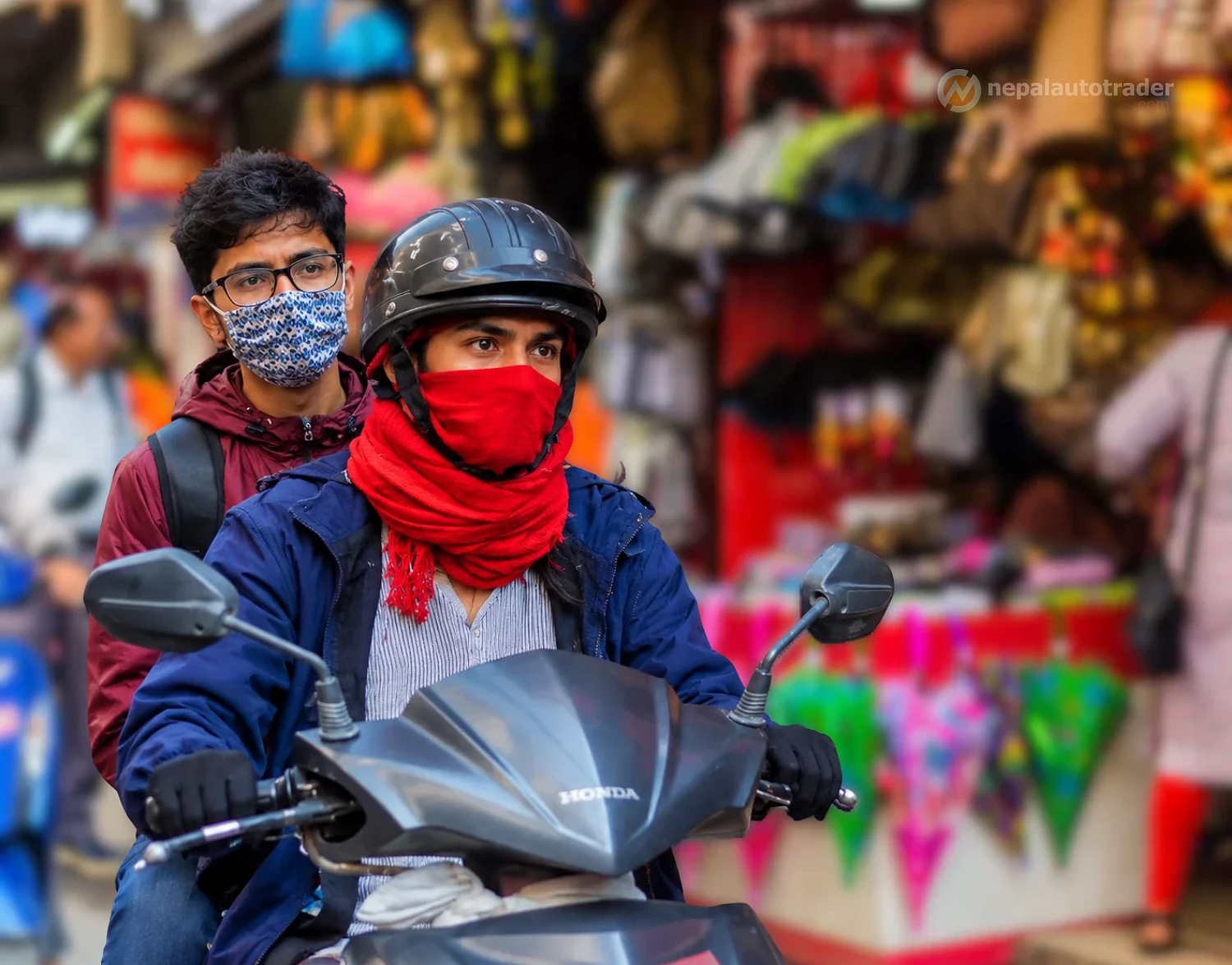
Motorcycle ride-sharing in Nepal has operated in a regulatory grey area for years. Thousands of riders have used private motorcycles to carry paying passengers, while the legal framework for treating these vehicles as public transport has remained a difficult question.
That situation is beginning to change in Bagmati Province. The provincial government has formally opened registration for motorcycles and scooters used in ride-sharing services, allowing eligible two-wheelers to receive black commercial number plates.
The first registrations have already taken place. According to Nepal Auto, five motorcycles have received black plates through a single company at the Transport Management Office in Gurjudhara, Kathmandu. The registration process marks a practical step toward bringing commercial motorcycle transport under the province's transport administration.
It is an important development for the ride-sharing industry. But the rules also make clear that this is not a simple exercise in changing the colour of a number plate.
The Transport Management Office (Motorcycle) in Gurjudhara, Kathmandu, has begun processing applications following a policy direction from the Bagmati Province government.
The first five motorcycles have been registered through one company. The process was opened following an eight-point directive issued by the Ministry of Industry, Tourism, Labour and Transport on Ashwin 1.
The distinction between private and commercial registration is central to the new arrangement. A motorcycle cannot simply be taken to the transport office by its owner and converted directly from a red plate to a black plate.
Instead, the vehicle must go through the relevant ride-sharing company. It must also satisfy the prescribed age requirements and technical standards.
For riders who have been working independently, this changes the registration process considerably. Commercial operation will now require a formal connection with an eligible company.
| Registration detail | Current arrangement |
|---|---|
| Province | Bagmati Province |
| Registration office | Transport Management Office, Gurjudhara, Kathmandu |
| Initial registrations | 5 motorcycles |
| Registration channel | Through a ride-sharing company |
| Commercial number plate | Black plate |
| Private owner application | Direct individual conversion is not permitted |
Only five registrations have been reported so far. That is a small beginning, but it establishes that the administrative process is moving beyond policy announcements.
One of the most important conditions concerns the role of ride-sharing companies. The provincial arrangement does not allow individual owners to independently approach the transport office and request commercial registration for their private motorcycles.
Vehicles must be submitted through the relevant company. The motorcycle must also meet the age requirements established for public transport registration. The authorities have made it clear that very old motorcycles and vehicles that fail to meet the required standards will not qualify.
The exact maximum vehicle age and the complete technical eligibility criteria are not specified in the source report. Prospective applicants should therefore confirm the current requirements with the transport office or their ride-sharing company before beginning the process.
This approach creates a more structured relationship between vehicle owners, ride-sharing operators and the transport administration.
There are practical reasons for that structure. A commercial vehicle carries paying passengers, which creates responsibilities beyond those associated with ordinary private use. Registration, inspection, insurance and operating permissions all become part of the ownership arrangement.
For drivers, the process could mean additional paperwork and compliance costs. For passengers, the intention is to create a clearer system of accountability.
Under the new arrangement, eligible motorcycles and scooters registered as public vehicles will receive black number plates and route permits similar to those issued to metered taxis.
The registration follows Schedule 6, Part C, of the Vehicle and Transport Management Regulations, 2054. This gives the two-wheelers a formal public transport classification rather than leaving them registered solely as private vehicles.
The regulatory requirements extend beyond registration. The provincial directive also covers inspections, pollution testing, fares and passenger protection.
| Requirement | What it means |
|---|---|
| Number plate | Black commercial registration plate |
| Route permission | Similar to the permits issued to metered taxis |
| Pollution testing | Testing using the existing methods and equipment |
| Vehicle inspection | Inspection under the prescribed standards for medium and small vehicles |
| Fare regulation | Rates determined by the provincial ministry |
| Passenger protection | Mandatory passenger insurance |
The inspection process will follow the Criteria for Inspection of Medium and Small Vehicles, 2074, with prescribed fees collected under the provincial Economic Act.
Existing testing methods and equipment will also be used for pollution measurement. The directive provides a framework for checking motorcycles without requiring an entirely separate testing system.
Additional motorcycles joining a transport service that already has periodic permits and registration will also be subject to the applicable provisions of the provincial Economic Act.
Perhaps the most significant part of the new arrangement is the emphasis on passenger protection.
Motorcycles registered as public transport vehicles must carry mandatory passenger insurance. The directive refers to point 11.12 of the Transport Management Work Procedure, 2060, as the basis for this requirement.
Fare regulation is another important change. Rather than allowing commercial motorcycle operators to determine their own operating rates without provincial oversight, the ministry will determine the applicable fares.
That could have implications for both ride-sharing companies and their drivers. Companies will need to operate within the prescribed framework, while riders will have to understand how regulated fares affect their earnings.
The key requirements can be grouped into three areas:
There are still unanswered questions about the final fee structure, detailed vehicle age limits and how the fare system will be implemented across different ride-sharing platforms. These details will matter when drivers calculate whether commercial registration makes financial sense.
The provincial decision arrives during a period of wider disagreement over public transport registration in Kathmandu Valley.
The federal Department of Transport Management has separately moved to restrict new public passenger vehicle registrations in the valley, with exceptions for school buses and replacement vehicles. Bagmati Province, meanwhile, has proceeded with a framework that allows eligible motorcycles and scooters to enter public transport registration.
That difference in approach raises questions about coordination between federal and provincial authorities. It also creates a larger debate about how motorcycle ride-sharing should fit into Nepal's public transport system.
Two-wheelers offer a flexible transport option in congested urban areas. They can reach streets where larger vehicles struggle, and app-based booking has made them a familiar part of daily travel in Kathmandu.
But flexibility alone cannot replace regulation. Passenger safety, vehicle condition, insurance coverage and fair operating practices need clear standards. The challenge is to introduce those safeguards without making the service impractical for drivers or passengers.
For now, Bagmati has taken a concrete administrative step. The first five black-plate registrations demonstrate that the process is operational, even if nationwide or province-wide adoption remains uncertain.
The immediate priority will be understanding how the registration system works in practice. The first five motorcycles provide an initial example, but the process will need to accommodate a much larger pool of eligible vehicles if it is to have a meaningful effect on the market.
Drivers should avoid assuming that an existing private registration automatically qualifies their motorcycle for commercial use. The company-based application process and vehicle eligibility conditions remain essential.
The next developments to watch include:
The real measure of this policy will not be the number of black plates issued in its opening phase. It will be whether the system creates a safer, more accountable and commercially workable environment for motorcycle ride-sharing.
Bagmati has opened the door. Now the province needs to make sure the rules work on the road, not just at the transport office.
Q: Have ride-sharing motorcycles started receiving black number plates in Bagmati Province?
A: Yes. Registration has started at the Transport Management Office in Gurjudhara, Kathmandu. The first five motorcycles have been registered through one ride-sharing company.
Q: Can an individual motorcycle owner directly convert a red plate into a black plate?
A: No. Under the reported arrangement, owners must apply through a ride-sharing company. The motorcycle must also satisfy the prescribed age and technical requirements.
Q: Which motorcycles are eligible for commercial registration?
A: Motorcycles and scooters used for ride-sharing can qualify if they meet the applicable age and technical standards. Very old vehicles and those that fail the requirements will not be accepted.
Q: Will black-plate motorcycles receive route permits?
A: Yes. Eligible two-wheelers registered as public vehicles will receive route permits similar to those issued to metered taxis.
Q: Is passenger insurance compulsory for ride-sharing motorcycles?
A: Yes. The provincial directive requires mandatory passenger insurance for motorcycles registered as public transport vehicles.
Q: Who will determine ride-sharing motorcycle fares?
A: The Bagmati Province ministry will determine the applicable fares. The detailed fare rates are not specified in the source report.

Nepal Auto-Trader is one-stop platform for all automotive needs. We provide unbiased and unparalleled news/reviews of all auto-motives being launched in Nepalese Auto-Industry. Find recent updates and price of bikes/cars, compare and review recently launched bikes/cars, buy/sell/trade reconditioned cars/bikes and all government news about changing rules and regulation, road safety by subscribing us.

Subscribe to our Newsletter
© Copyright 2026, Nepal Autotrader


.png)
.png)