

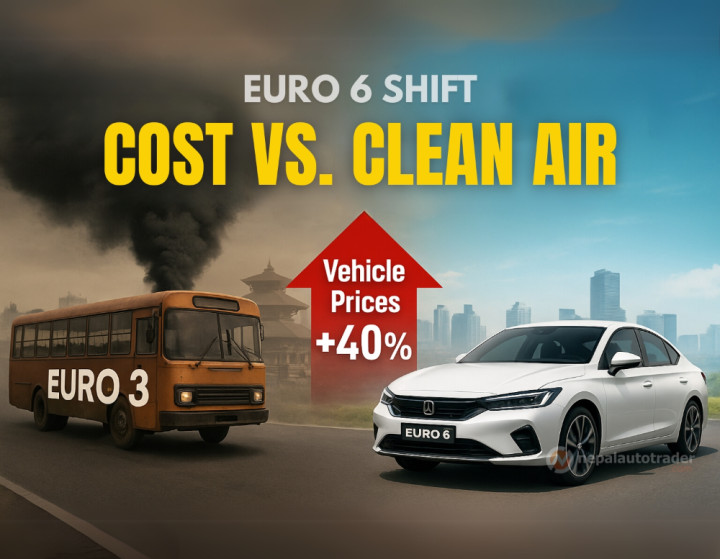
Vehicle Price Surge: Anticipated 30–40% increase in commercial vehicle prices due to Euro 6 compliance.
Infrastructure Gaps: Lack of trained technicians and service centers for advanced emission systems.
Fuel Quality Mismatch: Importing Euro VI fuels while most vehicles remain Euro II/III compliant.
EV Momentum: Over 70% of new passenger vehicle imports are electric, indicating a significant shift towards electrification.
Implementation Roadblocks: Need for phased approach, stakeholder alignment, and regulatory clarity.
Euro 6 standards, introduced by the European Union, aim to reduce harmful vehicle emissions, particularly nitrogen oxides (NOx) and particulate matter (PM). Compliance requires advanced engine technologies, high-quality fuels, and sophisticated after-treatment systems.
Transitioning to Euro 6 is expected to increase vehicle prices in Nepal. The advanced technologies required for compliance—such as selective catalytic reduction systems and diesel particulate filters—add to manufacturing costs. Industry experts estimate that the price of commercial vehicles could rise by approximately 30 to 40 percent due to these enhancements.
Implementing Euro 6 standards necessitates substantial upgrades in fuel quality and maintenance infrastructure. Nepal Oil Corporation has been importing Euro VI standard fuels since April 2020. However, the majority of vehicles on Nepalese roads are not Euro VI compliant, rendering the benefits of cleaner fuels less effective.
Moreover, the maintenance of Euro 6 vehicles requires specialized knowledge and equipment. Currently, there is a shortage of trained technicians capable of servicing these advanced systems. The Nepal Automobile Dealers' Association (NADA) emphasizes the need for a phased implementation, allowing time to develop the necessary human resources and infrastructure.
Despite the challenges, the adoption of Euro 6 standards promises significant environmental and public health benefits. By reducing emissions of NOx and PM, the standards aim to improve air quality, particularly in urban areas like Kathmandu, where vehicular emissions contribute to approximately 30 percent of air pollution.
Cleaner air can lead to a decrease in respiratory and cardiovascular diseases, enhancing the overall health of the population. Furthermore, aligning with international emission standards positions Nepal as a responsible global citizen committed to environmental sustainability.
Various stakeholders have weighed in on the proposed implementation:
Government: Advocates for immediate adoption to combat rising pollution levels.
Automobile Dealers: Support the move but call for a phased approach to allow market adaptation and infrastructure development.
Technical Experts: Highlight the need for training programs to prepare technicians for servicing Euro 6 vehicles.
Environmentalists: Urge swift action to mitigate environmental degradation and health risks.
To ensure a smooth and effective transition to Euro 6 standards, the following measures are recommended:
Phased Implementation: Introduce the standards in stages, starting with urban centers where pollution levels are highest.
Infrastructure Development: Invest in upgrading fuel quality, service centers, and diagnostic tools necessary for Euro 6 vehicles.
Training Programs: Establish educational initiatives to equip technicians with the skills required for maintenance and repair.
Public Awareness Campaigns: Inform consumers about the benefits of Euro 6 vehicles and the importance of regular maintenance.
Incentives and Subsidies: Provide financial support to offset the increased costs for consumers and encourage the adoption of cleaner vehicles.
The implementation of Euro 6 emission standards in Nepal represents a critical step toward environmental preservation and public health improvement. While challenges related to vehicle pricing and infrastructure exist, a strategic, phased approach involving all stakeholders can facilitate a successful transition. With concerted efforts, Nepal can achieve cleaner air and a healthier future for its citizens.
PREVIOUS NEWS

Nepal Auto-Trader is one-stop platform for all automotive needs. We provide unbiased and unparalleled news/reviews of all auto-motives being launched in Nepalese Auto-Industry. Find recent updates and price of bikes/cars, compare and review recently launched bikes/cars, buy/sell/trade reconditioned cars/bikes and all government news about changing rules and regulation, road safety by subscribing us.

Subscribe to our Newsletter
© Copyright 2026, Nepal Autotrader


.png)
.png)