

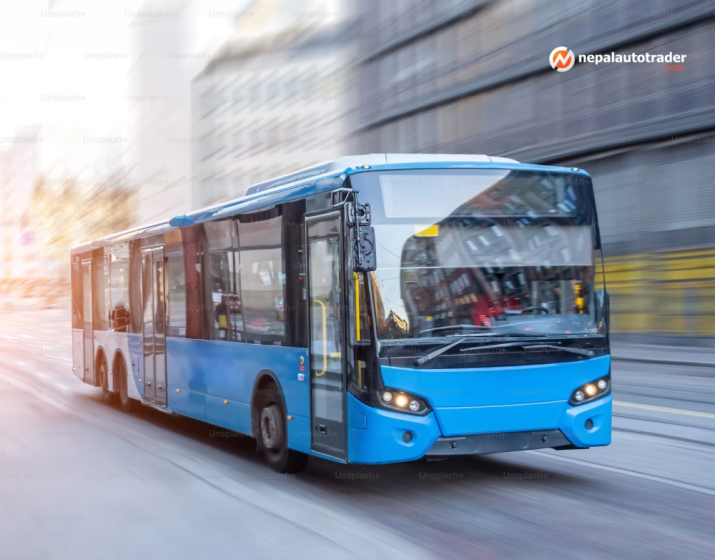
Nepal's push toward cleaner mobility is taking another step forward. Authorities are preparing to offer a discount on route permits for electric buses, a move designed to encourage operators to invest in battery-powered public transport.
The development is significant because route permits remain one of the key regulatory requirements for commercial passenger transport. Any reduction in permit-related costs can improve the business case for operators considering a shift away from diesel-powered fleets.
That matters.
The discussion also comes at a time when policymakers are searching for practical ways to accelerate public transport electrification, not just private EV adoption. Industry officials have repeatedly argued that incentives have historically favored passenger cars while large public transport vehicles received comparatively limited support.
Operating a public transport business involves much more than purchasing a vehicle. Operators must manage permits, inspections, financing, maintenance and route approvals.
A route permit discount may not sound dramatic at first glance, but it directly affects recurring operating costs.
| Area | Current Challenge | Potential Impact of Discount |
|---|---|---|
| Route Permit | Regulatory cost for operation | Lower administrative burden |
| Fleet Expansion | High investment requirement | Improved business viability |
| EV Adoption | Higher upfront purchase price | Additional incentive for operators |
Electric buses typically require a larger initial investment than conventional diesel buses. Transport officials have previously acknowledged that affordability remains one of the biggest obstacles facing electric public transport operators.
Reducing permit-related costs will not solve every challenge. But it can help narrow the gap.
For years, Nepal's EV success story has largely been driven by private passenger vehicles. Public transport adoption has been slower despite clear advantages in operating efficiency and emissions reduction.
Recent policy discussions suggest that authorities increasingly recognize the need to support larger commercial EVs.
Several developments highlight that shift:
Night-time electric bus services have already entered operation on key Kathmandu Valley corridors, demonstrating growing confidence in electric public transport systems.
The route permit proposal does not exist in isolation.
Nepal's transport sector has spent the past year debating everything from EV fare structures to commercial vehicle taxation. Authorities have previously discussed reducing electric bus fares because operating costs can be lower than those of diesel-powered vehicles.
At the same time, parts of the industry have raised concerns about increasing taxes on commercial vehicles, including certain electric transport categories. Those concerns have intensified discussions around what kind of incentives are necessary to keep public transport electrification on track.
| Policy Area | Direction | Industry Impact |
|---|---|---|
| EV Fare Structure | Under discussion | Potential passenger savings |
| Commercial EV Taxation | Recently revised | Cost concerns from operators |
| Route Permit Discount | Proposed support measure | Encourages EV bus deployment |
Here's the thing. Public transport operators often make investment decisions based on long-term operating economics rather than headline purchase prices alone. Incentives that improve profitability over several years can influence fleet decisions more than one-time benefits.
The answer depends on scale.
If the concession is substantial enough, it could encourage more entrepreneurs to consider electric buses for regional and urban routes. If the savings are modest, the measure may serve more as a policy signal than a transformational incentive.
Either way, the direction is clear.
Government agencies have repeatedly emphasized that Nepal's future transport system will increasingly depend on electric mobility. Officials have also stated that there is no long-term alternative to electrification as the country seeks cleaner and more efficient transport solutions.
Not everyone will notice it immediately. Yet decisions involving permits, operational fees and regulatory costs often shape the transport sector just as much as headline vehicle incentives.
The transport industry will now be watching closely for implementation details.
Key questions remain:
Those answers will determine whether the proposal becomes a meaningful catalyst for investment or simply another positive signal in Nepal's broader EV roadmap.
Still, the message coming from policymakers is becoming increasingly consistent. If Nepal wants cleaner cities and a more modern transport network, electric buses will need stronger support than they have received in the past. And route permit concessions could be one of the first practical steps in that direction.
Q: What is the proposed benefit for electric bus operators?
A: Authorities are preparing a policy that would provide a discount on route permit charges for eligible electric buses, helping reduce operating costs.
Q: Has the exact discount amount been announced?
A: No. Publicly available information has not confirmed a specific percentage or monetary value for the proposed concession.
Q: Why are electric buses receiving special consideration?
A: Policymakers want to encourage cleaner public transport and accelerate the transition away from fossil-fuel-powered vehicles.
Q: Will the discount affect passenger fares?
A: No direct fare reduction has been announced. However, lower operating costs could improve the economics of electric bus services.
Q: Are electric buses already operating in Nepal?
A: Yes. Electric buses are operating on several routes, including services introduced in Kathmandu and other parts of the country.

Nepal Auto-Trader is one-stop platform for all automotive needs. We provide unbiased and unparalleled news/reviews of all auto-motives being launched in Nepalese Auto-Industry. Find recent updates and price of bikes/cars, compare and review recently launched bikes/cars, buy/sell/trade reconditioned cars/bikes and all government news about changing rules and regulation, road safety by subscribing us.

Subscribe to our Newsletter
© Copyright 2026, Nepal Autotrader


.png)
.png)