

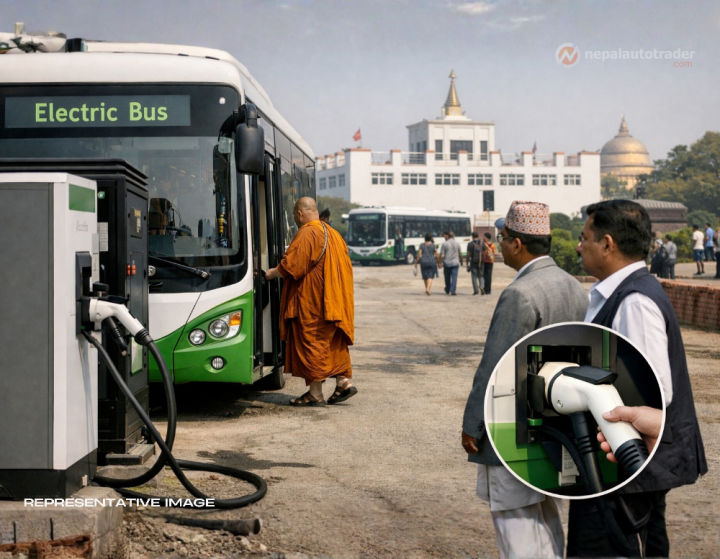
Nepal Government proposes electric bus deployment in Lumbini to promote clean public transport
Focus on tourism mobility with zero emission EV buses for pilgrimage routes
Initiative supports Nepal’s shift toward affordable EV adoption and sustainable transport
Opportunity for private operators and EV suppliers through government-backed programs
Expected improvement in last-mile connectivity for tourists visiting Lumbini
Aligns with Nepal’s clean energy advantage driven by hydropower
Positions Lumbini as a pilot model for green mobility in South Asia
Nepal is stepping deeper into the electric mobility space, and this time the spotlight is on Lumbini. The government’s proposal to introduce electric buses in this historic and religious hub is not just about transportation. It is about reshaping how tourism, sustainability, and infrastructure work together.
With global attention shifting toward clean transport and affordable EV solutions, Nepal is using Lumbini as a testing ground for a greener future.
Electric buses are becoming a key part of public transport systems worldwide. Countries across Asia are rapidly adopting EV fleets to cut emissions and reduce fuel costs.
Rising adoption of electric cars and two-wheelers
Strong reliance on hydropower, making EVs cleaner than fossil alternatives
Government incentives encouraging EV imports and usage
High tourist footfall throughout the year
Compact travel routes suitable for electric buses
Opportunity to create a clean and quiet transport environment
| Market | Focus Area | EV Bus Strategy |
|---|---|---|
| India | Urban transport | Large-scale tenders and subsidies |
| China | Mass electrification | Global leader in EV bus supply |
| Nepal | Tourism mobility | Targeted pilot in Lumbini |
Nepal’s approach is smaller in scale but sharper in intent. It focuses on impact rather than volume.
While the government has not locked specific models, standard electric buses in such deployments follow similar benchmarks.
| Specification | Typical Range |
|---|---|
| Battery Capacity | 150 to 350 kWh |
| Driving Range | 150 to 300 km |
| Charging Time | 1 to 3 hours fast charge |
| Seating Capacity | 20 to 40 passengers |
| Powertrain | Fully electric |
Zero emission operation
Low noise levels improving passenger experience
Regenerative braking for efficiency
Digital monitoring systems
Low-floor design for easy access
The Lumbini EV bus initiative creates value across multiple levels.
Reduction in fuel imports
Progress toward climate goals
Stronger positioning as a sustainable tourism destination
Lower operating and maintenance costs
Access to incentives and policy support
Entry into a growing EV ecosystem
Cleaner and quieter travel
Improved connectivity within Lumbini
Better overall transport experience
| Factor | Electric Buses | Diesel Buses |
|---|---|---|
| Emissions | Zero | High |
| Running Cost | Low | High |
| Noise | Minimal | Loud |
| Maintenance | Lower | Higher |
| Sustainability | High | Low |
Electric buses clearly outperform diesel alternatives in long-term efficiency and environmental impact.
Nepal is not trying to outscale larger markets. Instead, it is building a focused model around tourism and sustainability.
Tourism-first EV deployment
Clean energy advantage from hydropower
Lower entry barriers for EV adoption
Potential to scale across major cities
This positions Nepal as a niche but promising player in the EV landscape.
The Lumbini EV bus plan could set the tone for nationwide adoption.
Increased visibility for EV public transport
Boost in charging infrastructure development
Attraction for EV manufacturers and investors
Expansion to cities like Kathmandu and Pokhara
Integration with smart transport systems
Development of fast charging corridors
The Lumbini EV bus initiative is a calculated move that blends tourism with clean mobility. It shows how a focused project can deliver real impact without massive scale.
If executed well, this could become a model for other regions in Nepal and beyond. The shift toward electric public transport is no longer theoretical. In Lumbini, it is beginning to take shape.

Nepal Auto-Trader is one-stop platform for all automotive needs. We provide unbiased and unparalleled news/reviews of all auto-motives being launched in Nepalese Auto-Industry. Find recent updates and price of bikes/cars, compare and review recently launched bikes/cars, buy/sell/trade reconditioned cars/bikes and all government news about changing rules and regulation, road safety by subscribing us.

Subscribe to our Newsletter
© Copyright 2026, Nepal Autotrader


.png)
.png)