

The pressure has been building for years. Now, the Ministry of Communication and Information Technology is moving with intent.
At the center of this push is a stubborn number, 2.9 million pending driving licences. Applicants, many dating back to May 2022, have been stuck in a system that simply could not keep up. Payment slips became temporary licences. Temporary became routine. That is the problem the ministry is now trying to end.
The reform plan, already approved, focuses on one thing, speed with accountability. Officials are no longer speaking in vague timelines. The target is clear, mid-July for clearing the entire backlog. That matters.
It is not just about printing cards. It is about restoring trust in a system that stalled under pressure, policy gaps, and infrastructure failures.
The turnaround hinges on output. And output is finally climbing.
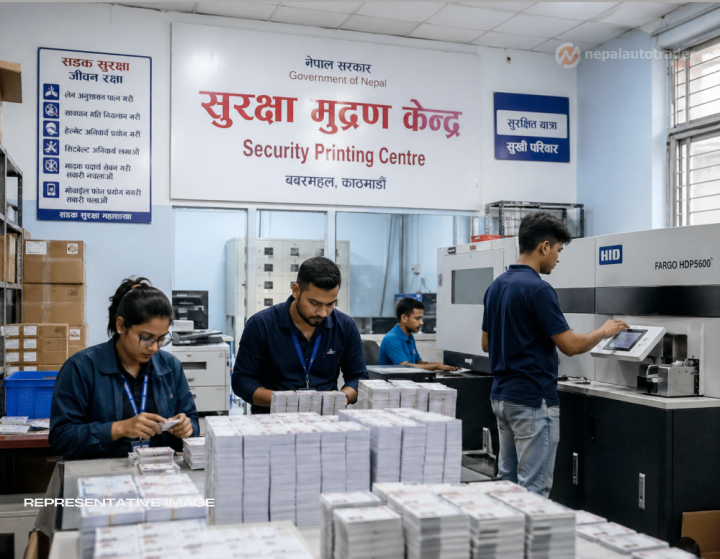
The Security Printing Center has become the backbone of this effort, replacing earlier fragmented processes. Current capacity is being pushed aggressively, with daily production scaling up toward tens of thousands.
| Metric | Current Status | Target |
|---|---|---|
| Total backlog | 2.9 million licences | Full clearance by mid-July |
| First phase printing | 1.2 million licences | Deadline April 25 |
| Printed so far | Hundreds of thousands | Ongoing distribution |
| Remaining backlog | 1.7 million licences | Next agreement phase |
The numbers look clinical. The reality is not. Each figure represents years of waiting, missed opportunities, and repeated visits to transport offices.
There is also a financial layer. Earlier delays were tied directly to budget constraints, forcing staggered contracts and incomplete execution. Now, funding is being unlocked in phases. That changes the tempo.
If output sustains at current capacity, the backlog is no longer a structural crisis. It becomes a timeline problem. A solvable one.
This is where the story shifts.
The Department of Transport Management has introduced a 24-hour licence issuance system. Not theoretical. Not pilot-only. It is already processing real applicants.
Here is how the new workflow operates:
The shift from physical data transfer to a fully digital pipeline removes one of the biggest bottlenecks in the old system. No more manual movement. No more delays tied to logistics.
Most applicants now receive licences within a day. Remote regions may take slightly longer, up to two days. But the difference is stark. This changes things.
For context, the system handles around 5,000 to 6,000 applications daily. Maintaining this speed is not optional. It is the new baseline.
The reforms are not stopping at printing.
The government is preparing to integrate licence services into the Nagarik App within 45 days. That means application, tracking, and potentially delivery, all shifting into a unified digital ecosystem.
| Reform Area | Current State | Upcoming Change |
|---|---|---|
| Application process | Office-based and online mix | App-based integration |
| Status tracking | Manual inquiries | Digital tracking system |
| Delivery model | Office collection | Planned home delivery |
This is not just digitization for optics. It is an attempt to reduce physical dependency on transport offices, which have historically been overwhelmed.
There is also discussion around home delivery of licences. If implemented, it would close the loop entirely. Apply digitally. Receive physically. Minimal friction.
It sounds simple. It has not been simple. That is why execution matters more than announcements.
The backlog did not appear overnight. It accumulated through a chain of failures.
At one point, applicants waited years after passing trials. Some licences were even destroyed during disruptions, forcing additional administrative confusion.
The system was reactive. It needed to become predictive. That shift is now underway, but it comes late.
Even today, the structure remains layered, federal oversight, provincial execution, centralized printing. Coordination is still critical. And fragile.
The next phase is execution under pressure.
The government has committed that from August onwards, no applicant will need to carry a payment slip as proof. That is a bold line in the sand.
If achieved, it marks the end of one of Nepal’s most persistent public service failures.
But the margin for error is thin.
Any break in this chain, and the backlog returns.
Still, there is momentum. Real, measurable momentum. And for the first time in years, the system looks like it might catch up with demand.
That matters.
Q: When will Nepal clear the driving licence backlog?
A: The government has set a target to clear all 2.9 million pending licences by mid-July. This depends on sustained high-volume printing and efficient distribution.
Q: How fast can new applicants receive licences now?
A: Under the new system, licences are issued within 24 hours of data submission, with delivery typically the next day.
Q: What is the role of the Security Printing Center?
A: The Security Printing Center handles large-scale licence production, replacing earlier fragmented systems and enabling faster output.
Q: Will licence services be available through mobile apps?
A: Yes, the government plans to integrate services into the Nagarik App within 45 days, allowing digital applications and tracking.
Q: Why was there such a large backlog?
A: The backlog resulted from centralized bottlenecks, infrastructure damage, and budget delays, compounded over several years.
Q: Will physical visits to transport offices still be required?
A: While some processes may still require office interaction, upcoming digital integration and planned home delivery aim to reduce dependency significantly.

Nepal Auto-Trader is one-stop platform for all automotive needs. We provide unbiased and unparalleled news/reviews of all auto-motives being launched in Nepalese Auto-Industry. Find recent updates and price of bikes/cars, compare and review recently launched bikes/cars, buy/sell/trade reconditioned cars/bikes and all government news about changing rules and regulation, road safety by subscribing us.

Subscribe to our Newsletter
© Copyright 2026, Nepal Autotrader


.png)
.png)