

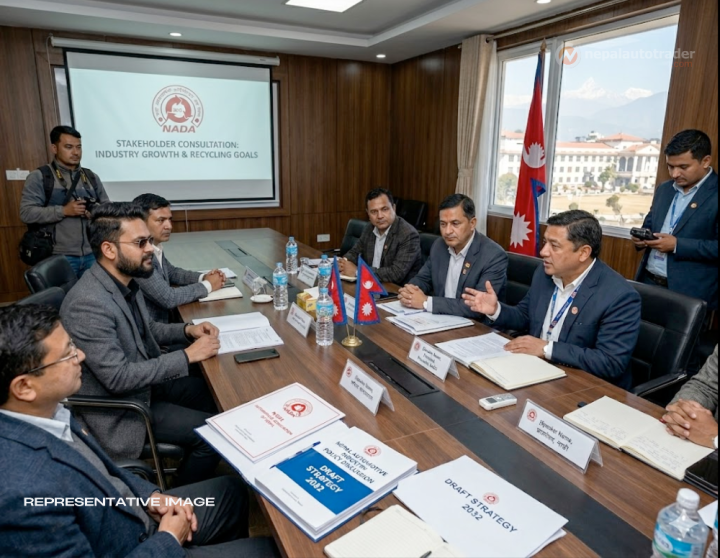
The conversation inside Nepal’s auto industry is shifting. Not slowly, not cautiously. It is pivoting hard toward manufacturing. And at the center of that shift sits one demand, an incentive policy for the component industry.
The NADA Automobiles Association of Nepal is now pushing the government to look beyond imports and showroom sales. The argument is simple, but layered. Without a domestic ecosystem for parts, assembly remains shallow. Without assembly depth, industrial growth stalls. That matters.
This is not a theoretical concern. Nepal has already taken its first steps into vehicle assembly, but the absence of supporting industries is becoming a bottleneck. Industry voices are increasingly clear, if Nepal wants to move up the value chain, it cannot skip components.
There is also a timing angle. With policy debates intensifying and the government signaling more structured engagement with stakeholders, the window to influence direction is open. Briefly open. This changes things.
The demand is not vague. It is targeted, and it reflects years of friction between policymakers and the private sector.
NADA is calling for a policy framework that actively encourages investment in component manufacturing. Not just permission, but incentives.
The logic is grounded in industrial economics. Assembly alone does not create deep value. Components do. Thousands of them.
In fact, assembling a vehicle involves thousands of parts. Without local production, every one of those components becomes an import dependency. That is where the cost structure breaks. Quietly, but consistently.
Here is the uncomfortable truth, Nepal’s auto sector has started assembling vehicles, but it has not yet built the ecosystem that makes assembly meaningful.
Stakeholders have repeatedly pointed out that component manufacturing is the backbone of any mature automobile industry. Without it, assembly remains an isolated activity, not an industrial chain.
This gap is already visible when you look at the broader structure:
| Industry Layer | Current Status in Nepal | Key Challenge |
|---|---|---|
| Vehicle Imports | Well established | High dependency on foreign supply |
| Vehicle Assembly | Emerging stage | Limited localization |
| Component Manufacturing | Minimal presence | Lack of incentives and infrastructure |
This imbalance matters more than it appears. It affects everything, from pricing to employment to technology transfer.
And without intervention, it will persist. That is the concern driving NADA’s push.
Behind the demand for incentives sits a deeper frustration, policy inconsistency. Industry leaders have repeatedly flagged this as the single biggest barrier to investment.
Frequent changes in tax rates, shifting regulatory frameworks, and unclear long-term direction have created a cautious private sector. Investors hesitate. Projects stall.
Recent discussions across the industry echo the same theme, Nepal needs a 5 to 10 year policy framework to unlock serious capital.
The component industry, by nature, requires long gestation periods. Factories, supply chains, workforce training, none of it works on short policy cycles.
This is where the current demand becomes more than just a request. It becomes a test of intent. Is Nepal ready to commit to industrialization, or will it continue managing imports?
The answer will shape the next decade. Quietly, but decisively.
If the policy support materializes, the upside is significant. Not speculative, but structural.
A functional auto component ecosystem can transform multiple dimensions of the economy:
There is also a multiplier effect. Component manufacturing feeds into other industries, steel, plastics, electronics. It creates clusters. And clusters create resilience.
For a country looking to industrialize, this is not optional. It is foundational.
And yet, it requires alignment, policy, finance, infrastructure, and coordination. Miss one, the system weakens.
The push from NADA comes at a moment when the auto sector is already navigating multiple pressures, from financing constraints to evolving EV policies and infrastructure gaps.
But there is also momentum. The idea of ‘Made in Nepal’ is no longer symbolic. It is being tested on the ground.
Related industry discussions, like the need for stable policies highlighted in the auto sector policy debate, reinforce the same direction. Consistency first, incentives next.
Similarly, earlier proposals submitted by NADA, such as those covered in industry recommendations to the government, show that this is part of a broader strategy, not a standalone demand.
Even infrastructure and logistics, discussed in pieces like policy instability impacts, tie back into the same ecosystem challenge.
The direction is clear. The execution is not.
If incentives arrive, Nepal could begin building a real automotive manufacturing base. If they don’t, the sector risks remaining an import-driven market with limited industrial depth.
That tension defines the moment. And moments like this rarely repeat.
Q: What is NADA demanding from the government?
A: NADA is urging the government to introduce a dedicated incentive policy to promote the auto component manufacturing industry. The goal is to support localization and strengthen the overall automotive ecosystem.
Q: Why is component manufacturing important for Nepal?
A: Component manufacturing enables value addition, reduces import dependency, and supports vehicle assembly. It is essential for building a sustainable and competitive automotive industry.
Q: Does Nepal currently have a component industry?
A: The component industry in Nepal is still minimal. While vehicle assembly has started, the supporting ecosystem for parts manufacturing remains underdeveloped.
Q: How does policy instability affect the auto sector?
A: Frequent policy changes create uncertainty, discouraging long-term investment. Industries like component manufacturing require stable policies to justify capital-intensive investments.
Q: What could change if incentives are introduced?
A: Incentives could attract investment, create jobs, and accelerate industrial growth. They could also help Nepal integrate into regional and global automotive supply chains.

Nepal Auto-Trader is one-stop platform for all automotive needs. We provide unbiased and unparalleled news/reviews of all auto-motives being launched in Nepalese Auto-Industry. Find recent updates and price of bikes/cars, compare and review recently launched bikes/cars, buy/sell/trade reconditioned cars/bikes and all government news about changing rules and regulation, road safety by subscribing us.

Subscribe to our Newsletter
© Copyright 2026, Nepal Autotrader


.png)
.png)