


LEO Flight reveals the JetBike personal eVTOL at CES 2026
No pilot license required under FAA Part 103 ultralight rules
Propeller-free electric jet propulsion improves safety and noise control
Top speed around 60 mph with 10 to 15 minutes of flight time
Priced at USD 99,900 with deliveries starting late 2026
Targets recreational flyers rather than daily urban commuting
Signals rising demand for affordable personal electric aircraft in 2025 and beyond
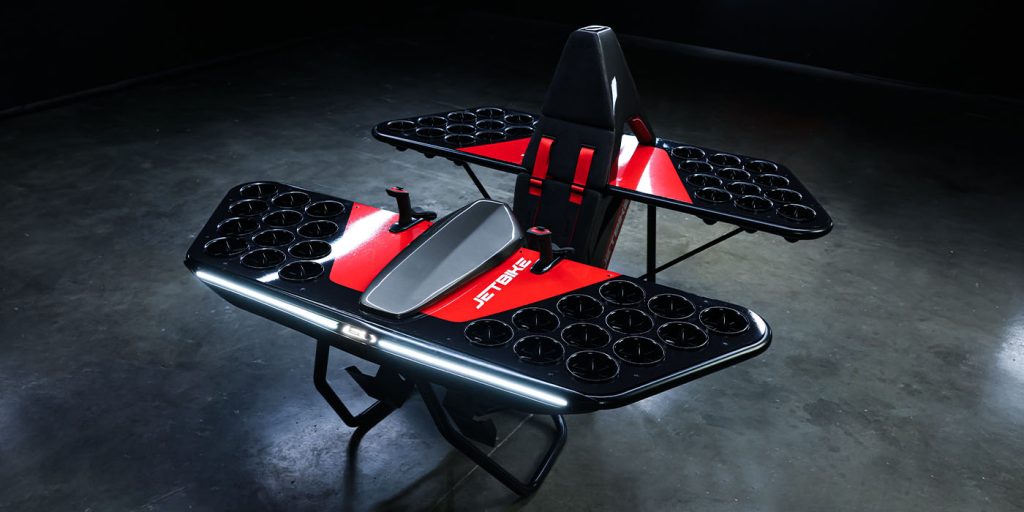
The JetBike Top View / Source: LEO Flight
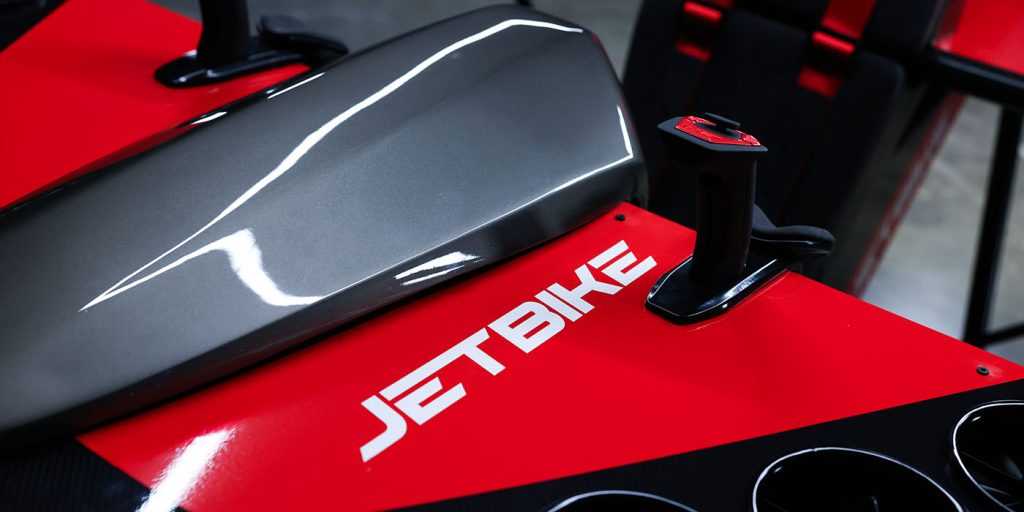
JetBike Throttle Detail / Source: LEO Flight
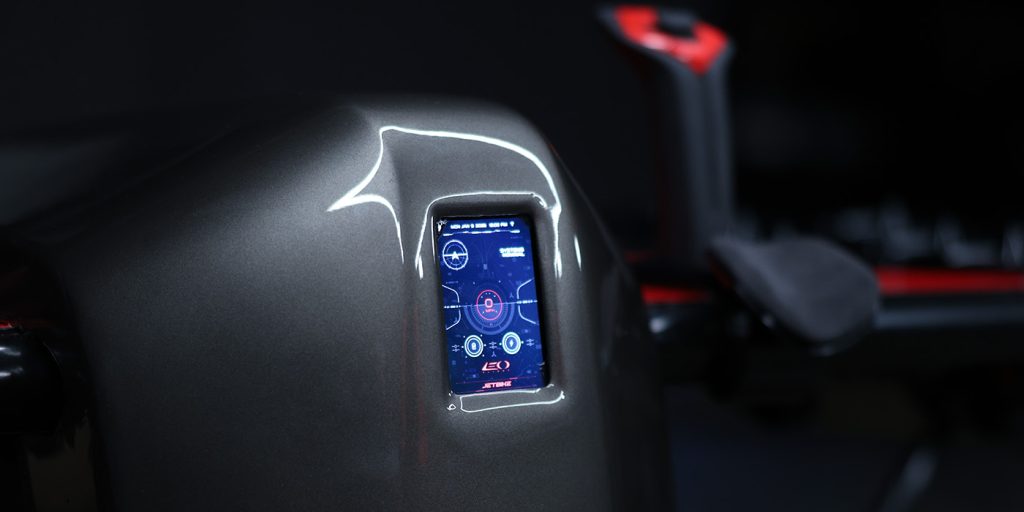
JetBike Dashboard / Source: LEO Flight
You no longer need a pilot license or a runway to fly. The LEO JetBike brings personal electric flight closer to your garage than ever before.
Unveiled at CES 2026, the JetBike is a compact electric vertical takeoff and landing aircraft designed for everyday users. It focuses on simplicity, safety, and accessibility rather than speed records or long-distance travel.
The timing matters. Global interest in personal eVTOLs rose sharply between 2024 and 2025 as battery density improved and regulators clarified ultralight rules. LEO Flight is stepping into a market that is finally ready.
Most personal eVTOLs rely on exposed propellers. The JetBike does not.
Instead, it uses multiple enclosed electric jet fans. This lowers the risk of injury, reduces turbulence, and keeps noise levels near 80 dB. That is roughly the sound of city traffic.
This design also makes the JetBike easier to approach for first-time flyers.
The JetBike meets FAA Part 103 ultralight requirements. That means you can legally fly it in the United States without a pilot license, registration, or medical certification.
For many buyers, this is the single biggest reason to care.
| Specification | LEO JetBike |
|---|---|
| Propulsion | Electric ducted jet fans |
| Top speed | Approx. 60 mph |
| Flight time | 10 to 15 minutes |
| Max altitude | Approx. 15 feet |
| Noise level | Around 80 dB |
| Charging | Standard home outlet |
| Storage | Fits in a standard garage |
You should think of this as a flying electric bike, not a flying car. Short flights. Controlled height. Clear limits.
LEO Flight set the JetBike price at USD 99,900 with a refundable deposit under USD 1,000.
That number matters.
In 2024 and 2025, most personal flight vehicles stayed above USD 150,000. Some pushed past USD 700,000. The JetBike anchors expectations lower and makes competitors look expensive.
Industry analysts expect the sub-USD 120,000 eVTOL segment to grow fastest through 2028 as battery costs drop and demand for recreational aviation rises.
Expert insight
“A product like JetBike works because it removes fear. No propellers, no license, no complex controls. That is how personal aviation scales.”
Amit Kulkarni, Urban Air Mobility Analyst
| Feature | LEO JetBike | Jetson ONE | Xturismo |
|---|---|---|---|
| Propulsion | Electric jet fans | Open propellers | Hybrid engine |
| Price range | Around USD 100k | Around USD 90k | Over USD 600k |
| License required | No | No | Varies |
| Intended use | Recreation | Recreation | Showcase luxury |
| Storage | Garage friendly | Garage friendly | Large footprint |
You trade flight time and altitude for simplicity and safety. For many buyers, that is a fair deal.
You should look at the JetBike if you want controlled personal flight without training barriers.
You should skip it if you expect cross-city travel or long airtime.
This is about experience, not transport efficiency.
Expert insight
“Early buyers are not commuters. They are explorers. These products sell emotion first and utility second.”
Laura Chen, Electric Mobility Researcher
By late 2026, the JetBike will test whether personal electric flight can move beyond novelty.
If early owners fly regularly and safely, expect tighter competition, longer ranges, and lower prices by 2028.
The JetBike is not the final answer. It is the opening move.
No. It qualifies as an ultralight aircraft under FAA Part 103 in the United States.
You get about 10 to 15 minutes per charge depending on conditions.
No. It is designed for short recreational flights, not long trips.
Noise levels stay near 80 dB, similar to city traffic.
LEO Flight plans first deliveries in late 2026.
It is designed for beginners with enclosed propulsion and electronic limits, but training is still recommended.

Nepal Auto-Trader is one-stop platform for all automotive needs. We provide unbiased and unparalleled news/reviews of all auto-motives being launched in Nepalese Auto-Industry. Find recent updates and price of bikes/cars, compare and review recently launched bikes/cars, buy/sell/trade reconditioned cars/bikes and all government news about changing rules and regulation, road safety by subscribing us.

Subscribe to our Newsletter
© Copyright 2026, Nepal Autotrader


.png)
.png)