

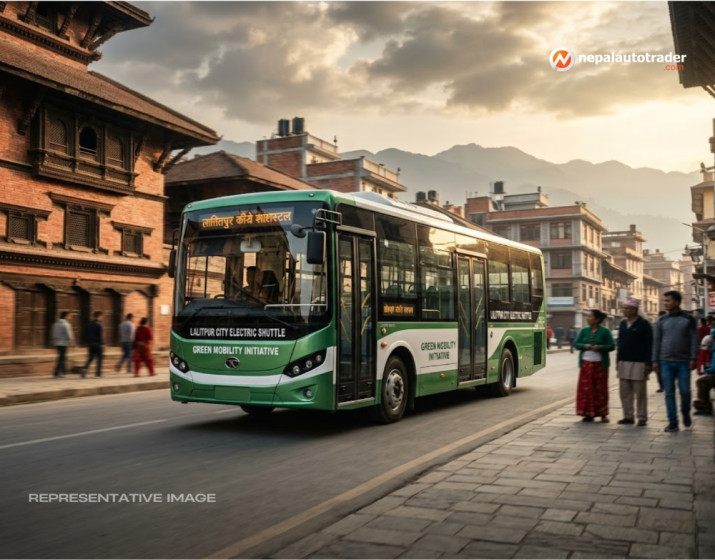
Lalitpur Metropolitan City is preparing to operate an electric shuttle bus service, adding another layer to its growing commitment toward sustainable urban transport. The announcement may sound modest at first glance. A shuttle service rarely grabs headlines the way a new highway or metro proposal does.
But this project touches a daily problem that thousands of residents understand all too well, moving efficiently between major urban destinations without relying on private vehicles.
That matters.
The metropolitan city has increasingly positioned itself as a local government willing to experiment with cleaner mobility solutions. From electric waste management vehicles to tourism-focused electric mobility trials, the municipality has shown a clear preference for electrification as part of its long-term urban strategy.
The proposed shuttle bus service fits directly into that vision.
Urban transport is often discussed through large infrastructure projects. Yet many commuters experience a different challenge, the gap between major destinations and available public transportation.
Electric shuttle buses are designed to address exactly that problem.
Rather than operating like conventional long-route buses, shuttle services typically focus on short, high-demand corridors. They can improve connectivity between business districts, heritage zones, commercial centers and public facilities.
For Lalitpur, the potential benefits are substantial:
Not everyone will notice it immediately. Yet transport planners often point out that smaller connectivity improvements can generate disproportionate benefits when they remove friction from daily travel.
The shuttle bus proposal is not emerging in isolation.
Over the past few years, Lalitpur has steadily expanded its involvement in electric mobility initiatives. The municipality has already introduced electric vehicles for municipal services and explored electric transportation options for tourism and city operations. Recent deployments of electric waste collection vehicles further reinforced the city's commitment to reducing fossil fuel use in public services.
Viewed through that lens, the shuttle bus project appears less like an experiment and more like the next logical step.
| Initiative | Purpose | Status |
|---|---|---|
| Electric Waste Collection Vehicles | Cleaner municipal operations | Operational |
| Tourism Mobility Trials | Visitor transportation | Pilot initiatives conducted |
| Electric Shuttle Bus Project | Urban passenger mobility | Planned |
Here's the thing. Cities rarely become sustainable through one transformative project. Progress usually arrives through a series of connected decisions that gradually change how people move.
Lalitpur's move also reflects a larger shift taking place across Nepal's transportation landscape.
Electric buses have become increasingly visible in public transport discussions. Sajha Yatayat already operates electric buses in Kathmandu Valley, while additional operators have expanded EV bus fleets on urban routes. Public agencies and local governments continue exploring ways to increase electric mobility adoption.
| Metric | Current Situation | Relevance To Lalitpur |
|---|---|---|
| Public EV Bus Adoption | Growing across Kathmandu Valley | Supports operational feasibility |
| Charging Infrastructure | Expanding gradually | Essential for shuttle deployment |
| Municipal EV Programs | Increasing among local governments | Creates policy momentum |
The timing is significant. Nepal's EV conversation has evolved beyond private cars. Increasing attention is now being directed toward public transport, where environmental benefits can be multiplied across thousands of passengers.
Every transport project sounds simple during the announcement phase.
Operation is where reality arrives.
For the electric shuttle bus plan to succeed, several factors will need careful management:
Public transport users ultimately judge a system on reliability, not announcements. If buses arrive when expected and connect useful destinations, ridership follows. If they do not, commuters quickly return to motorcycles, ride-sharing services and private vehicles.
And that's important.
The electric shuttle bus initiative offers a glimpse into how local governments may shape Nepal's future mobility landscape. National policies often attract attention, but municipal projects frequently determine how transportation improvements are experienced on the ground.
Lalitpur's approach appears increasingly clear. The city is building a portfolio of electric transport solutions rather than relying on a single flagship project.
If implemented effectively, the shuttle bus service could become more than a transport project. It could serve as a practical example of how medium-sized cities can use electric mobility to improve urban life without waiting for massive infrastructure investments.
Sometimes the most meaningful transportation upgrades are the ones that quietly make everyday travel easier.
Q: What is Lalitpur Metropolitan City's electric shuttle bus project?
A: The municipality plans to operate an electric shuttle bus service aimed at improving urban mobility, strengthening connectivity and supporting cleaner transportation within the city.
Q: Has the city announced route details?
A: Detailed route information has not been publicly confirmed in the available source material. Additional operational details are expected as the project progresses.
Q: Will the shuttle buses be fully electric?
A: Yes. The initiative has been announced as an electric shuttle bus project, aligning with Lalitpur's broader commitment to sustainable mobility.
Q: How does this compare with other EV public transport initiatives in Kathmandu Valley?
A: The project complements wider adoption of electric buses across the Valley, including services operated by Sajha Yatayat and other transport providers.
Q: Why is the project important for residents?
A: Improved connectivity, reduced emissions and better access to public transport are among the key expected benefits.
Q: When will the shuttle buses begin operation?
A: The source material confirms the municipality's intention to operate the service, but a specific launch date has not been disclosed.

Nepal Auto-Trader is one-stop platform for all automotive needs. We provide unbiased and unparalleled news/reviews of all auto-motives being launched in Nepalese Auto-Industry. Find recent updates and price of bikes/cars, compare and review recently launched bikes/cars, buy/sell/trade reconditioned cars/bikes and all government news about changing rules and regulation, road safety by subscribing us.

Subscribe to our Newsletter
© Copyright 2026, Nepal Autotrader


.png)
.png)