

The trip from Midtown Manhattan to John F. Kennedy International Airport is a familiar test of patience. A cab ride can cost about $100 and take between 45 minutes and two hours depending on traffic.
For Paul Sciarra, executive chairman of Joby Aviation, the future should look very different. His vision is a journey completed in less than 10 minutes, thousands of feet above the congestion that slows traditional ground transport.
The idea sounds like science fiction. Yet the industry is moving closer to making it real.
New technology, increased competition, and regulatory progress are combining to push electric vertical takeoff and landing aircraft, known as eVTOLs, into real-world testing. The implications extend far beyond the companies building them. Urban transportation itself could change.
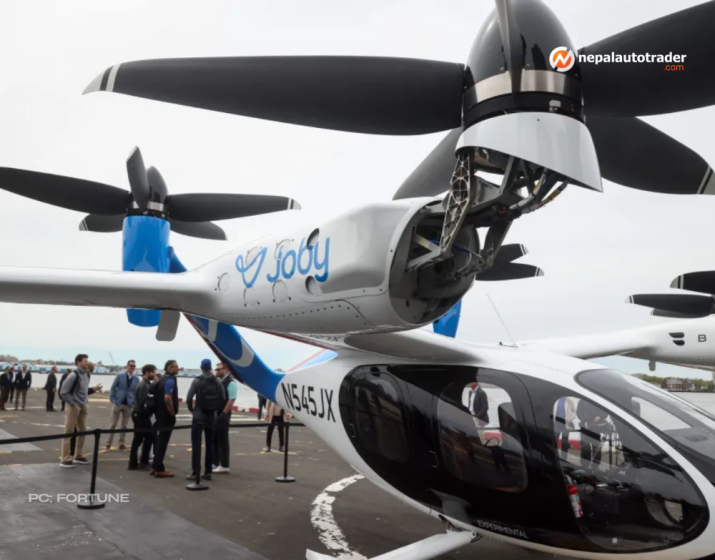
Unlike helicopters and conventional airplanes, eVTOL aircraft blend characteristics from multiple types of aviation. They can rise vertically like helicopters, fly efficiently like airplanes, and use electric propulsion systems similar to drones.
| Specification | Joby eVTOL Details |
|---|---|
| Aircraft type | Electric vertical takeoff and landing aircraft |
| Rotor system | Six electric rotors |
| Passenger capacity | Four passengers and one pilot |
| Range | Up to 100 miles |
| Operating altitude | As low as 1,000 feet |
Joby's aircraft lifts vertically using its rotors, then tilts them sideways to move forward. The company says the design produces only a fraction of the noise generated by traditional helicopters.
That lower noise profile could become one of the technology's biggest advantages. Helicopters have long faced restrictions because of sound, safety concerns, and limited operating areas.
"If you can operate in places where helicopters have not been able to operate," Sciarra says, "you fundamentally shift what is possible."
The next major step is testing outside controlled environments. Starting this summer, federally sanctioned pilot projects will allow selected companies to operate eVTOL aircraft for cargo and eventually passenger trials.
| Company | Project Details | Current Focus |
|---|---|---|
| Joby Aviation | Testing in New York, New Jersey, Texas, and Florida | Cargo first, passenger testing later |
| Archer Aviation | Testing in Florida, Texas, and New York/New Jersey | Commercial passenger operations target |
| Beta Technologies | Testing across seven announced pilot projects | Electric aircraft and eVTOL development |
| Wisk Aero | Texas pilot project | Fully autonomous eVTOL technology |
The government program allows companies to test aircraft while they continue the FAA certification process. That approach could speed development, but it also creates a challenge: convincing passengers that experimental aviation is safe.
Public trust may become as important as engineering. Flying in a new aircraft above city streets requires confidence, not just curiosity.
Joby is not alone in chasing the air taxi market. Archer Aviation is developing its 12-rotor Midnight eVTOL and plans to begin commercial passenger operations in time for the Summer Olympics in Los Angeles in July 2028.
Archer believes Los Angeles could be an ideal market because many trips under 20 miles can take more than an hour by road. A short air journey could dramatically reduce travel times.
Other companies are approaching the market differently.
The competitive race is no longer about proving that electric aircraft can fly. It is about proving they can operate safely, affordably, and at scale.
Even if aircraft receive approval, the skies above cities will become more complicated. Unlike commercial jets flying above 35,000 feet, air taxis will operate at much lower altitudes, likely no higher than 4,000 feet, on short urban routes.
Managing hundreds of aircraft in busy metropolitan areas will require new approaches to air traffic control.
Joby's acquisition of Blade Air Mobility gives the company experience in commercial helicopter operations. Blade already operates heliports in New York and has handled significant flight volumes.
Cost will also determine whether consumers actually use air taxis. Analysts believe fares must eventually approach standard ride-share pricing rather than premium helicopter levels.
The real challenge isn't cost, it's execution. Building the aircraft is only one part of creating an entirely new transportation network.
Q: When will Joby Aviation air taxis begin passenger testing?
A: Joby expects to begin noncommercial passenger tests in the fall or winter after initial cargo operations.
Q: How far can Joby's eVTOL aircraft fly?
A: The aircraft can carry four passengers and a pilot for up to 100 miles.
Q: Will Joby air taxis replace helicopters?
A: Joby believes eVTOL aircraft could operate in locations where helicopters face noise and safety limitations, but helicopters will not disappear immediately.
Q: When will air taxis become commercially available?
A: Commercial availability depends on FAA certification and successful completion of testing programs.
Q: Which companies compete with Joby Aviation?
A: Archer Aviation, Beta Technologies, and Wisk Aero are among the companies developing competing electric aircraft.

Nepal Auto-Trader is one-stop platform for all automotive needs. We provide unbiased and unparalleled news/reviews of all auto-motives being launched in Nepalese Auto-Industry. Find recent updates and price of bikes/cars, compare and review recently launched bikes/cars, buy/sell/trade reconditioned cars/bikes and all government news about changing rules and regulation, road safety by subscribing us.

Subscribe to our Newsletter
© Copyright 2026, Nepal Autotrader


.png)
.png)