

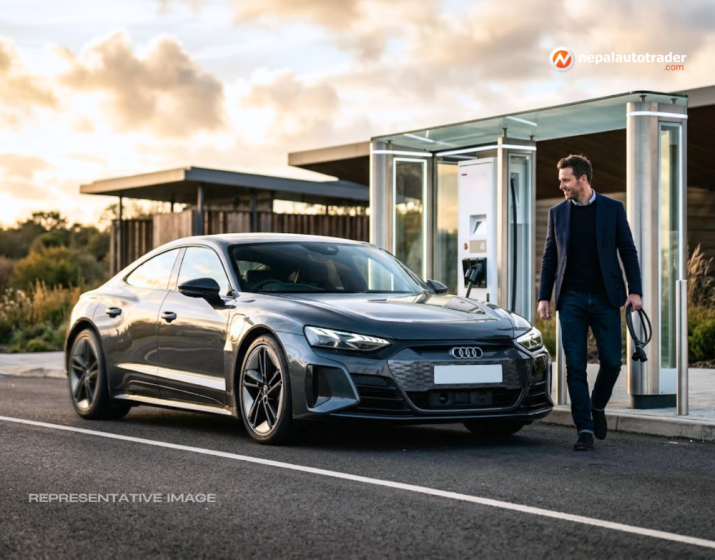
Electric vehicles are no longer attracting buyers solely because of lower emissions. A new 2026 Automotive Performance, Execution and Layout Study from JD Power suggests owners are increasingly happier with the vehicles they drive every day, and the gap between EVs and conventional models continues to widen.
The study covered 78,514 owners of 2026 model-year vehicles. On a 1,000-point satisfaction scale, EVs recorded an average score of 910, comfortably ahead of the 850-point average achieved by vehicles powered by internal combustion engines, including petrol, diesel and hybrid models.
While the difference is significant, the bigger story lies in how consistently EVs outperformed conventional vehicles across the ownership experience.
The research found that electric vehicles delivered higher satisfaction across almost every major evaluation category. Owners particularly praised the driving characteristics that have become defining strengths of modern EVs.
The largest advantage appeared in powertrain satisfaction, where EVs scored 109 points higher than comparable petrol and diesel vehicles. Instant torque, refined operation and a more effortless driving experience continue to reshape expectations among new car buyers.
| Category | Electric Vehicles | ICE Vehicles |
|---|---|---|
| Overall Satisfaction | 910 / 1,000 | 850 / 1,000 |
| Powertrain Satisfaction | 109-point advantage | Lower score |
The report shows that satisfaction extends well beyond acceleration and performance. Owners also rated electric vehicles highly for everyday usability, an area that often determines whether drivers remain happy with their purchase over the long term.
According to the study, EVs earned stronger scores in several areas:
These improvements highlight how manufacturers are refining the overall ownership experience rather than focusing only on battery capacity or driving range. For consumers, that broader approach may prove even more important over time.
Perhaps the most notable finding is how quickly owner satisfaction has improved. The study reports that EV satisfaction increased by 22 points in just one year, the largest improvement among vehicle categories.
Researchers attribute the gains to several developments that have made electric vehicle ownership more convenient.
| Factor | Impact on Ownership Experience |
|---|---|
| Charging infrastructure | Improved convenience |
| Driving range | Greater confidence for daily use |
| Battery technology | Enhanced overall ownership experience |
| User-friendly features | Higher customer satisfaction |
The timing is particularly significant as more markets continue investing in charging networks and manufacturers introduce increasingly capable electric models.
The study also supports conclusions from previous research indicating that most EV owners have little interest in returning to petrol-powered vehicles.
A separate recent survey found that 90 percent of EV owners expect their next vehicle to be another electric model. It also reported that 73 percent intend to keep at least one EV in their household permanently.
Those figures suggest satisfaction is translating into long-term loyalty, something every manufacturer hopes to achieve as competition in the electric vehicle segment intensifies.
As global EV adoption continues to accelerate, the latest JD Power findings reinforce an important message. Electric vehicles are increasingly being chosen not only because they reduce emissions, but because owners genuinely enjoy living with them. That shift could become one of the strongest drivers of future EV growth.
Q: How many vehicle owners participated in the JD Power study?
A: The study surveyed 78,514 owners of 2026 model-year vehicles, providing a broad view of customer satisfaction across different powertrains.
Q: What satisfaction score did electric vehicles achieve?
A: Electric vehicles received an average score of 910 out of 1,000, outperforming internal combustion engine vehicles.
Q: How did petrol, diesel and hybrid vehicles perform?
A: Internal combustion engine vehicles, including petrol, diesel and hybrid models, achieved an average satisfaction score of 850 points.
Q: Why are EV owners reporting higher satisfaction?
A: The study highlights stronger powertrain performance, quieter operation, rapid acceleration, improved comfort, better infotainment systems, enhanced battery technology and improved charging infrastructure as key reasons.
Q: Are EV owners likely to buy another electric vehicle?
A: A separate survey cited in the report found that 90 percent of EV owners expect their next vehicle to be another EV, while 73 percent plan to keep at least one EV in their household.

Nepal Auto-Trader is one-stop platform for all automotive needs. We provide unbiased and unparalleled news/reviews of all auto-motives being launched in Nepalese Auto-Industry. Find recent updates and price of bikes/cars, compare and review recently launched bikes/cars, buy/sell/trade reconditioned cars/bikes and all government news about changing rules and regulation, road safety by subscribing us.

Subscribe to our Newsletter
© Copyright 2026, Nepal Autotrader


.png)
.png)