

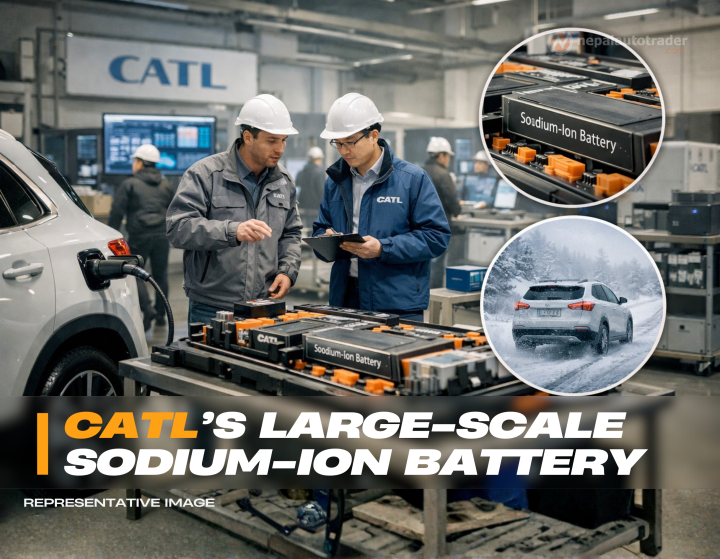
CATL to deploy sodium-ion batteries at scale across passenger EVs, commercial trucks, and energy storage in 2026.
Sodium-ion tech operates in extreme temperatures: -40°C to 70°C.
Energy density up to 175 Wh/kg; EV range exceeds 500 km.
First sodium-ion batteries certified under China’s GB 38031-2025 safety standard.
Reduces reliance on lithium, offering a cost-effective and sustainable alternative.
Supports battery swap systems and large-scale energy storage.
Potential global impact as automakers look to diversify EV battery supply chains.
Pricing expected to be competitive, accelerating adoption in emerging markets.
As electric vehicles continue to surge worldwide, battery technology is the key to unlocking new performance, safety, and affordability standards. CATL, the global leader in EV batteries, is preparing to roll out sodium-ion batteries at scale in 2026, signaling a pivotal shift for both automakers and consumers.
Dubbed Naxtra, CATL’s sodium-ion battery technology promises safer, cost-effective, and cold-resistant performance—making EVs more reliable in extreme climates and sustainable over the long term.
Global EV adoption is growing exponentially, but lithium supply is under pressure, and extreme temperature performance remains a challenge. CATL’s sodium-ion batteries offer a solution:
Reduced lithium dependency: Lowers cost and supply chain vulnerability.
Extreme temperature resilience: Operates from -40°C to 70°C, ideal for cold or hot regions.
Safety certification: First sodium-ion cells meeting China’s GB 38031-2025 EV battery standard.
Versatility: Compatible with passenger cars, commercial trucks, battery swaps, and energy storage systems.
Compared to traditional lithium-ion batteries used by BYD, Tesla, and Nio, sodium-ion technology provides safer, cheaper, and more climate-resilient alternatives. This positions CATL as a global pioneer in next-gen EV battery solutions.
CATL Sodium-Ion Battery Key Specs:
| Feature | Specification |
|---|---|
| Energy Density | Up to 175 Wh/kg |
| EV Range | 500+ km in passenger vehicles |
| Operating Temperature | -40°C to 70°C |
| Safety Certification | GB 38031-2025 |
| Formats | Power battery, 24V integrated battery |
| Applications | EVs, commercial trucks, battery swap systems, energy storage |
Key Advantages:
Exceptional cold-weather performance
Improved safety and stability
Reduced environmental impact compared to lithium-heavy batteries
Compatibility with battery swapping and large-scale energy storage systems
CATL’s sodium-ion technology offers multiple benefits for stakeholders:
For Automakers: Flexibility to produce EVs in diverse climates and expand energy storage solutions.
For Consumers: Reliable EV performance in extreme temperatures with extended range.
For the Planet: Reduced lithium usage supports sustainability and lowers supply chain pressure.
Economic Impact: Competitive pricing could accelerate adoption in emerging EV markets, including Asia, Europe, and Latin America.
By 2030, sodium-ion batteries could account for 10–15% of global EV battery production, particularly in regions with cold climates or limited lithium access. Analysts predict:
EV adoption in emerging markets could accelerate due to lower costs and enhanced battery safety.
Commercial EV fleets could leverage sodium-ion tech for high-reliability transport in extreme weather.
Battery swapping and stationary storage systems could scale rapidly, enabling grid support and renewable energy storage.
| Feature | CATL Sodium-Ion | Typical Lithium-Ion EV |
|---|---|---|
| Energy Density | Up to 175 Wh/kg | 160–250 Wh/kg |
| EV Range | 500+ km | 400–600 km |
| Temperature Resilience | -40°C to 70°C | -20°C to 60°C |
| Safety Certification | GB 38031-2025 | Varies |
| Environmental Impact | Lower lithium usage | High lithium reliance |
| Pricing Potential | Competitive | Higher (raw material cost) |
CATL sodium-ion batteries provide a compelling combination of safety, versatility, and sustainability, offering a credible alternative to traditional lithium-ion solutions.
CATL’s 2026 sodium-ion battery deployment could redefine EV technology. By providing safer, cost-effective, and climate-resilient solutions, the company strengthens China’s global leadership in EV innovation.
Expect automakers to increasingly adopt sodium-ion batteries, boosting EV reliability, expanding battery swap and energy storage systems, and opening opportunities in emerging markets worldwide. The next generation of EVs might finally overcome lithium constraints, thanks to CATL’s bold move into sodium-ion technology.

Nepal Auto-Trader is one-stop platform for all automotive needs. We provide unbiased and unparalleled news/reviews of all auto-motives being launched in Nepalese Auto-Industry. Find recent updates and price of bikes/cars, compare and review recently launched bikes/cars, buy/sell/trade reconditioned cars/bikes and all government news about changing rules and regulation, road safety by subscribing us.

Subscribe to our Newsletter
© Copyright 2026, Nepal Autotrader


.png)
.png)