

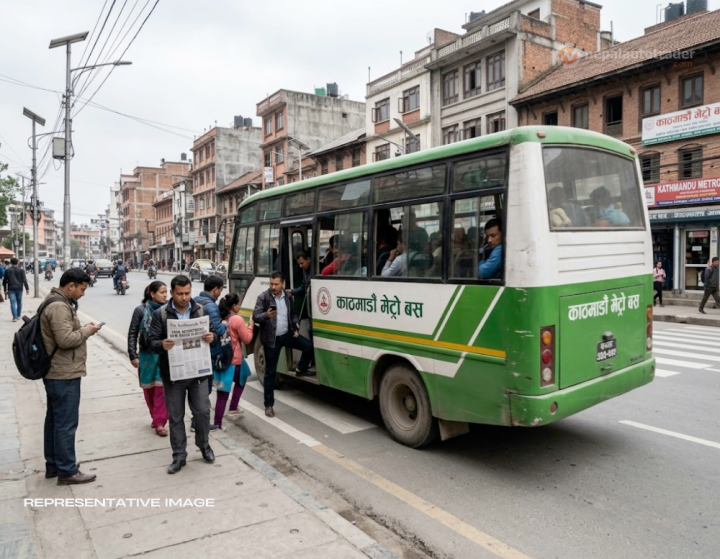
The increase in bus fare in Nepal did not arrive overnight. It has been building quietly, steadily, as transport operators struggled to keep up with rising costs. Fuel prices moved. Maintenance costs climbed. Spare parts became harder to manage. The equation stopped working.
Authorities finally stepped in, approving a revision that transport entrepreneurs had been pushing for. This changes things.
At its core, the fare adjustment is tied directly to fuel price fluctuations. When fuel costs rise, the entire public transport ecosystem feels it. Operators absorb the shock first. Passengers eventually share the burden.
That matters. Because in Nepal, buses are not optional. They are essential.
The revised structure applies across public transportation services, affecting both short-distance and long-distance routes. While exact fare figures vary depending on route categories, the intent is consistent, balancing operator sustainability with passenger affordability.
| Category | Previous Trend | Current Adjustment |
|---|---|---|
| Short Distance Routes | Lower fare baseline | Increment applied proportionally |
| Long Distance Routes | Distance-based pricing | Adjusted to reflect fuel cost pressure |
| Public Buses | Regulated fares | Revised under official approval |
The structure itself is not new. What has changed is the calibration. Slight shifts, but meaningful ones when multiplied across daily travel.
Small increase per ride. Big impact over time. That is the reality.
For transport entrepreneurs, this decision is less about profit and more about survival. Rising operational costs had squeezed margins to the point where continuing service was becoming difficult.
Consider the pressure points:
These are not optional costs. They are fixed realities.
The fare increase offers breathing room. Not comfort, just stability. That matters.
Without this adjustment, service disruptions were not far away. Routes could shrink. Frequency could drop. In some cases, operators might have exited altogether.
Now, the system stabilizes. For the moment.
On the other side of the equation sits the commuter. The daily passenger. The student, the worker, the small business owner.
For them, the bus fare increase is immediate and unavoidable.
There is no workaround for most users of public transport. No alternative mode that matches cost and accessibility. Which means even a marginal increase changes monthly budgets.
This is where the impact becomes personal:
It is subtle at first. Then it compounds. That is the pressure point.
And in a broader economic context, transport cost increases often ripple outward. Goods movement, logistics, supply chains, everything feels it.
This is not just about buses. It never is.
Fare revisions linked to fuel prices are not new. Nepal’s public transport system has followed this pattern before, adjusting fares when operating conditions shift significantly.
The difference this time lies in timing and intensity.
Costs have been rising across multiple fronts simultaneously. Not just fuel. Not just maintenance. A convergence of pressures.
This aligns with trends seen globally, where public transport systems are recalibrating to maintain service viability. Even in more advanced markets, operators face similar cost dynamics.
The pattern is clear. Costs rise. Resistance builds. Adjustment follows.
Then the cycle repeats.
The immediate outcome is stability. Operators continue running. Services remain intact. The system holds.
But the bigger question remains unanswered.
What happens if fuel prices rise again?
This is where uncertainty creeps in. If costs continue to climb, another revision may not be far away. And each revision chips away at affordability.
Authorities will likely monitor:
The balance is delicate. Tilt too far toward operators, passengers struggle. Tilt too far toward affordability, operators collapse.
There is no perfect equilibrium. Only adjustments.
For now, Nepal has made its move. The system breathes. The pressure eases, slightly.
But the story is not over. It rarely is.
Q: Why has the bus fare increased in Nepal?
A: The increase is primarily due to rising fuel prices and higher operational costs for transport operators. Authorities approved the revision to maintain service sustainability.
Q: Does the fare increase apply to all routes?
A: Yes, the adjustment applies across public transport services, including both short-distance and long-distance routes, though exact fares vary by distance.
Q: Will bus fares increase again soon?
A: That depends on fuel price trends and operating costs. If costs rise significantly again, further adjustments could be considered.
Q: How does this impact daily commuters?
A: Passengers will experience higher daily and monthly travel expenses, especially those relying heavily on public transport for work or study.
Q: Are transport operators benefiting from this increase?
A: The increase is designed to offset rising costs rather than generate excess profit. It helps operators maintain services without financial strain.

Nepal Auto-Trader is one-stop platform for all automotive needs. We provide unbiased and unparalleled news/reviews of all auto-motives being launched in Nepalese Auto-Industry. Find recent updates and price of bikes/cars, compare and review recently launched bikes/cars, buy/sell/trade reconditioned cars/bikes and all government news about changing rules and regulation, road safety by subscribing us.

Subscribe to our Newsletter
© Copyright 2026, Nepal Autotrader


.png)
.png)