

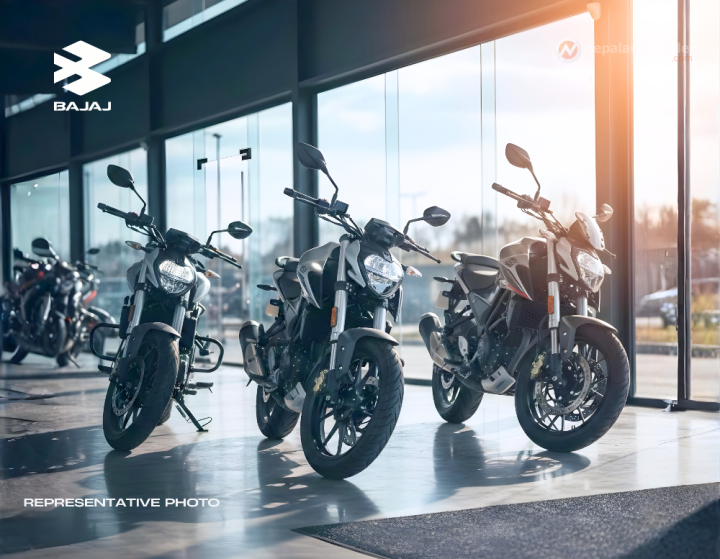
In Kathmandu, the buzz around Bajaj’s latest earnings call was palpable. The company announced that within the next year it will introduce eight new motorcycles, a number that eclipses the half a dozen it hinted at earlier in the year. This isn’t a modest refresh – it is a full‑scale expansion of the brand’s portfolio, aimed at shoring up market share before the fiscal year ends.
The strategy is simple: flood the market with fresh options while keeping price tags low enough to win over the price‑sensitive segment that fuels most sales in the sub‑500cc space. That matters because the Indian two‑wheel market is already saturated, and every percentage point of price advantage can swing a buyer’s decision.
The Pulsar family has long been Bajaj’s cash cow, and the company is doubling down on it. Executive Director Rakesh Sharma said the brand will continue to prioritize the 150cc and above segment, which currently accounts for more than 60 % of its two‑wheel revenue.
New Pulsar variants are slated to arrive roughly every month, with a target of two fresh or updated models each month. The cadence is aggressive, but it reflects the confidence Bajaj has in its engineering pipeline. Expect tighter bore‑stroke ratios, refined fuel‑injection maps, and a modest bump in horsepower across the board. While exact power figures remain under wraps, the focus on the 150cc+ bracket signals an intent to stay ahead of rivals that are still chasing the 125cc sweet spot.
One of the most intriguing moves is the planned de‑tuning of the Dominor 400 and NS 400 for the domestic market. New GST rules now levy a higher tax on motorcycles above 350cc, making the larger displacement less attractive to cost‑conscious buyers.
According to industry sources, Bajaj will shrink the engine capacity of these two models to 350cc without compromising the core character that made them popular among sport‑touring enthusiasts. The export versions, however, will retain the original 400cc displacement, preserving the brand’s global performance image.
This dual‑track approach lets Bajaj hedge its bets: domestically, it can price the bikes competitively, while internationally it can continue to sell the higher‑displacement variants to markets that value outright power.
The Indian budget announced earlier this year introduced a new GST slab for motorcycles over 350cc. The tax increase translates directly into higher on‑road prices, a reality that manufacturers cannot ignore.
Bajaj’s response is to recalibrate its engine sizes, as noted above, but also to streamline component sourcing and negotiate better terms with suppliers. The company claims these measures will offset most of the tax burden, keeping the final retail price within the reach of the average commuter.
That matters because the price‑sensitive segment accounts for roughly three‑quarters of total two‑wheel sales in India. Any misstep could hand a sizable chunk of the market to competitors like Hero and TVS, who are also tweaking their line‑ups to stay tax‑competitive.
If Bajaj sticks to its announced timeline, we will see a steady stream of announcements, each accompanied by a modest price cut or a value‑added feature such as LED lighting, digital instrument clusters, or improved fuel economy.
The company’s aggressive rollout also signals confidence in its production capacity. Recent upgrades at the Pune plant have increased output by 12 %, a figure that should comfortably absorb the additional eight model introductions.
From a consumer perspective, the flood of new bikes means more choice, more frequent discounts, and a higher likelihood of finding a model that fits a specific riding style or budget. From an industry angle, it raises the competitive bar, forcing rivals to accelerate their own development cycles.
In short, Bajaj’s 2026 plan is a high‑stakes gamble that could pay off handsomely if the market responds as expected. The company is betting on its Pulsar legacy, a clever engine‑size shuffle, and a pricing formula that respects the new GST reality. Time will tell whether the gamble reshapes the Indian two‑wheel landscape or simply adds another chapter to the ever‑evolving story of budget motorcycles.
Q: How many new motorcycles will Bajaj launch in 2026? A: Bajaj has announced plans to introduce up to eight new motorcycles in the next 12 months, exceeding the previously hinted half a dozen.
Q: Will the Dominor 400 and NS 400 be sold with smaller engines in India? A: Yes, both models will be offered with a 350cc engine domestically to mitigate the impact of the new GST surcharge, while export versions will keep the original 400cc capacity.
Q: When can buyers expect the first of the new Pulsar variants? A: Bajaj aims to roll out roughly two new or updated models each month, so the first arrivals should appear within the next few weeks after the earnings call.
Q: How does the GST increase affect pricing for motorcycles over 350cc? A: The higher GST rate adds directly to the on‑road price, prompting manufacturers like Bajaj to either reduce engine displacement or offer price incentives to stay competitive.
Q: Are the upcoming models targeted only at the Indian market? A: While most of the new launches will focus on the domestic price‑sensitive segment, Bajaj will continue to export the unchanged 400cc versions to overseas markets.
Q: What competitive advantage does Bajaj hope to gain with this launch plan? A: By flooding the market with fresh, affordable options and keeping the Pulsar line strong in the 150cc+ segment, Bajaj aims to protect its market share against rivals such as Hero and TVS.

Nepal Auto-Trader is one-stop platform for all automotive needs. We provide unbiased and unparalleled news/reviews of all auto-motives being launched in Nepalese Auto-Industry. Find recent updates and price of bikes/cars, compare and review recently launched bikes/cars, buy/sell/trade reconditioned cars/bikes and all government news about changing rules and regulation, road safety by subscribing us.

Subscribe to our Newsletter
© Copyright 2026, Nepal Autotrader


.png)
.png)