

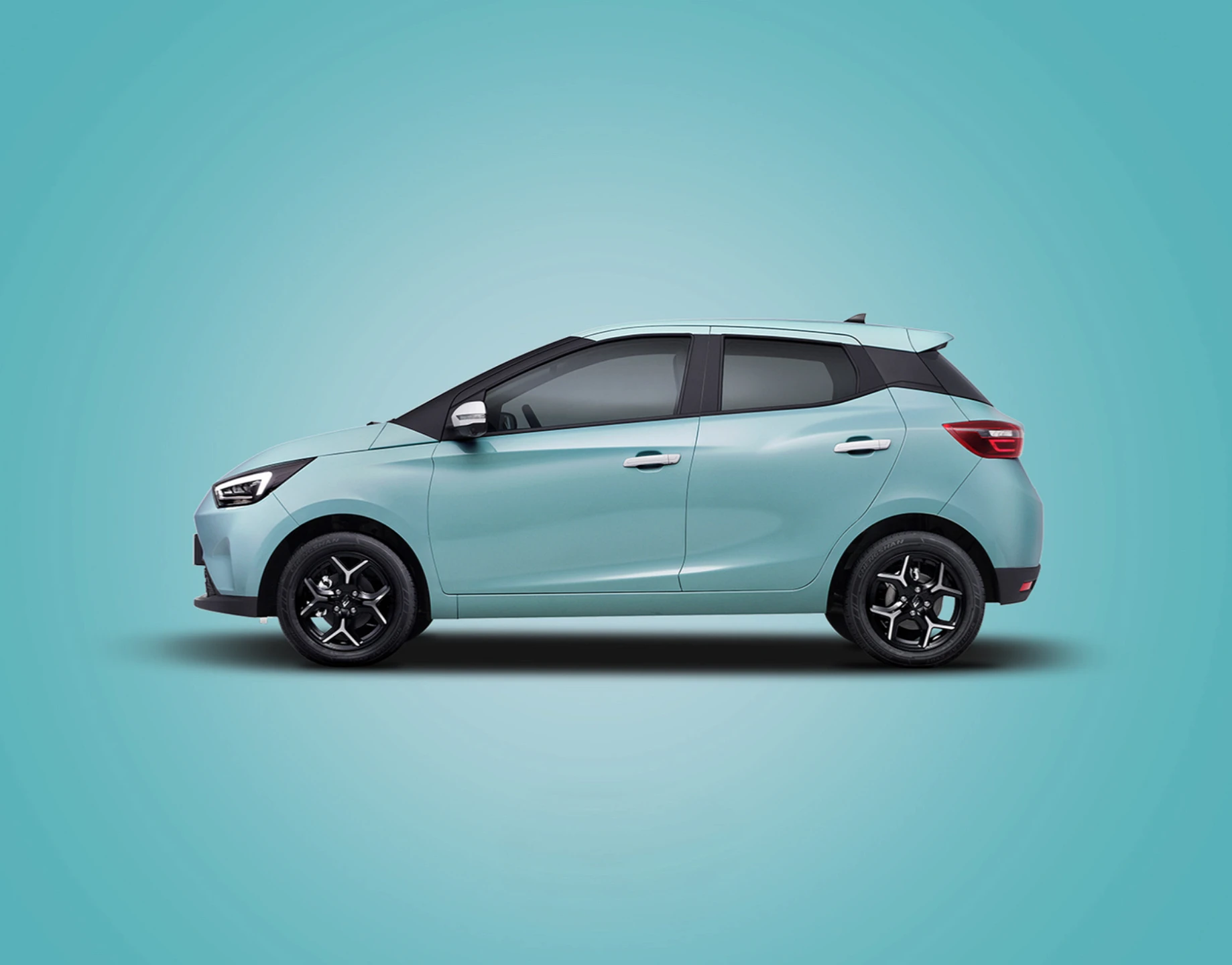
Nepal's affordable electric car market has another contender. The JMEV-3, a compact electric hatchback from China's Jiangling Motors Group, has arrived in Nepal through CG Motors, adding another option for buyers looking for a smaller city-friendly EV.
Its appeal is easy to understand. A compact footprint, a reasonably sized battery and a useful collection of driver assistance features make it an interesting addition to a segment where buyers are becoming increasingly selective.
According to Meroauto's October 28, 2026 report, the vehicle has already entered Nepal, with 55 units imported during Ashoj. The company has yet to announce its official retail price, although the report estimates that it could sell for around NPR 25 lakh.
That puts the JMEV-3 in an interesting position. It is arriving in a market where affordable electric hatchbacks are no longer judged by battery capacity alone. Equipment, charging convenience and everyday usability matter just as much.
CG Motors has introduced another name to its electric vehicle portfolio with the arrival of the JMEV-3. The JMEV brand already has a presence in Nepal through its electric taxi offering. This new model takes the brand into the passenger hatchback market.
JMEV operates under Jiangling Motors Group, a Chinese automotive manufacturer. The JMEV-3 is a compact five-seat electric car designed around urban mobility.
Its dimensions are particularly relevant in Nepal. Smaller cars are easier to manoeuvre through crowded streets, fit into tighter parking spaces and feel less intimidating for drivers moving from conventional hatchbacks to electric vehicles.
Here are the main dimensions reported for the Nepal-bound model.
| Specification | JMEV-3 |
|---|---|
| Length | 3,720 mm |
| Width | 1,640 mm |
| Height | 1,535 mm |
| Wheelbase | 2,390 mm |
| Seating capacity | 5 passengers |
| Front suspension | MacPherson independent suspension |
| Rear suspension | Torsion beam suspension |
The proportions suggest a car designed primarily for urban use rather than long-distance touring. Still, its five-seat layout gives it the flexibility expected from a small family hatchback.
Underneath its compact body, the JMEV-3 uses an LFP battery with 32.2 kWh capacity. The electric motor produces 50 kW of power and 125 Nm of torque.
Power goes to the front wheels through a front-wheel-drive system. The reported top speed is approximately 102 km/h.
These figures suggest a vehicle focused on everyday driving rather than high-speed performance. The instant torque delivery typical of electric motors should also make the car responsive in stop-and-go traffic and during urban acceleration.
| Powertrain detail | Reported specification |
|---|---|
| Battery chemistry | LFP |
| Battery capacity | 32.2 kWh |
| Motor power | 50 kW |
| Motor torque | 125 Nm |
| Drive system | Front-wheel drive |
| Top speed | Approximately 102 km/h |
| DC charging | 30% to 80% in approximately 30 minutes |
Charging is another important part of the package. According to the report, using a DC fast charger takes approximately 30 minutes to charge from 30% to 80%.
That is a useful feature for owners who depend on public charging infrastructure. However, the report does not provide an official driving range, AC charging time or maximum DC charging power. Those details will be important before buyers can make a proper comparison.
Small electric cars often have to make compromises to reach an accessible price. The JMEV-3 appears to be taking a different approach with its driver assistance equipment.
The reported Nepal specification includes an Advanced Driver Assistance System (ADAS), along with several practical features designed to support everyday driving.
There are additional features available in some international-market variants, including a 360-degree camera, smartphone application connectivity and battery temperature management. However, these features have not been confirmed for the Nepal specification.
That distinction matters. Buyers should not assume that every feature available internationally will be included in the vehicle sold by CG Motors.
The combination of a touchscreen interface and driver assistance technology gives the JMEV-3 a more modern equipment profile than its compact exterior might suggest. Its actual safety performance, however, will depend on the precise ADAS functions and independent crash test results, neither of which is detailed in the report.
The biggest unanswered question is pricing. CG Motors has not officially announced the JMEV-3's retail price. It is estimated that it could be available for around NPR 25 lakh.
If that estimate holds, the new hatchback could become an interesting option for customers shopping at the lower end of Nepal's electric passenger car market.
The report identifies the Kaiyi E-Qute 04 as its closest expected competitor, based on the JMEV-3's design, powertrain and equipment. The comparison will become clearer once official prices and complete specifications are available for both vehicles.
There are several factors that will determine whether the JMEV-3 can make a strong case.
For Nepalese buyers, the value proposition will be about more than getting an electric car at a lower price. It must also be practical to own.
The arrival of 55 units during Ashoj suggests that CG Motors has already brought in an initial batch ahead of its wider market introduction. It is a meaningful step, although the report does not confirm how many vehicles are currently available for immediate delivery.
The compact dimensions and front-wheel-drive layout make the JMEV-3 an obvious candidate for urban use. Its battery capacity and motor output should also be considered in the context of its intended role, rather than judged against larger electric SUVs.
There are still unanswered questions. The official price, driving range, warranty terms and full Nepal-specific equipment list have not been disclosed. These details will shape the buying decision far more than a headline battery figure.
CG Motors now has an opportunity to introduce a less familiar EV brand to a market that already has several established Chinese and international competitors. The JMEV-3 has a promising specification sheet, but the real test will be how well the package works at its eventual showroom price.
For now, the arrival is significant because it gives Nepalese buyers another compact electric hatchback to consider. Whether it becomes a serious alternative to the established options will depend on pricing, range and the ownership experience CG Motors can deliver.
Q: What is the expected price of the JMEV-3 in Nepal?
A: Its estimated that the JMEV-3 could cost around NPR 25 lakh. CG Motors has not officially announced the retail price.
Q: Who is bringing the JMEV-3 to Nepal?
A: CG Motors has brought the JMEV-3 to Nepal. The vehicle is manufactured by JMEV, which operates under China's Jiangling Motors Group.
Q: What is the battery capacity of the JMEV-3?
A: The JMEV-3 comes with a 32.2 kWh LFP battery. Its official driving range for the Nepal market has not been disclosed in the report.
Q: How powerful is the JMEV-3 electric motor?
A: Its electric motor produces 50 kW of power and 125 Nm of torque. The car uses a front-wheel-drive system and has a reported top speed of approximately 102 km/h.
Q: How long does the JMEV-3 take to charge?
A: Using a DC fast charger, the battery reportedly charges from 30% to 80% in approximately 30 minutes. The report does not specify the AC charging time.
Q: Which car will compete with the JMEV-3 in Nepal?
A: The Kaiyi E-Qute 04 is identified as a potential direct competitor. The final comparison will depend on their respective prices, equipment and official specifications.
PREVIOUS NEWS

Nepal Auto-Trader is one-stop platform for all automotive needs. We provide unbiased and unparalleled news/reviews of all auto-motives being launched in Nepalese Auto-Industry. Find recent updates and price of bikes/cars, compare and review recently launched bikes/cars, buy/sell/trade reconditioned cars/bikes and all government news about changing rules and regulation, road safety by subscribing us.

Subscribe to our Newsletter
© Copyright 2026, Nepal Autotrader


.png)
.png)