

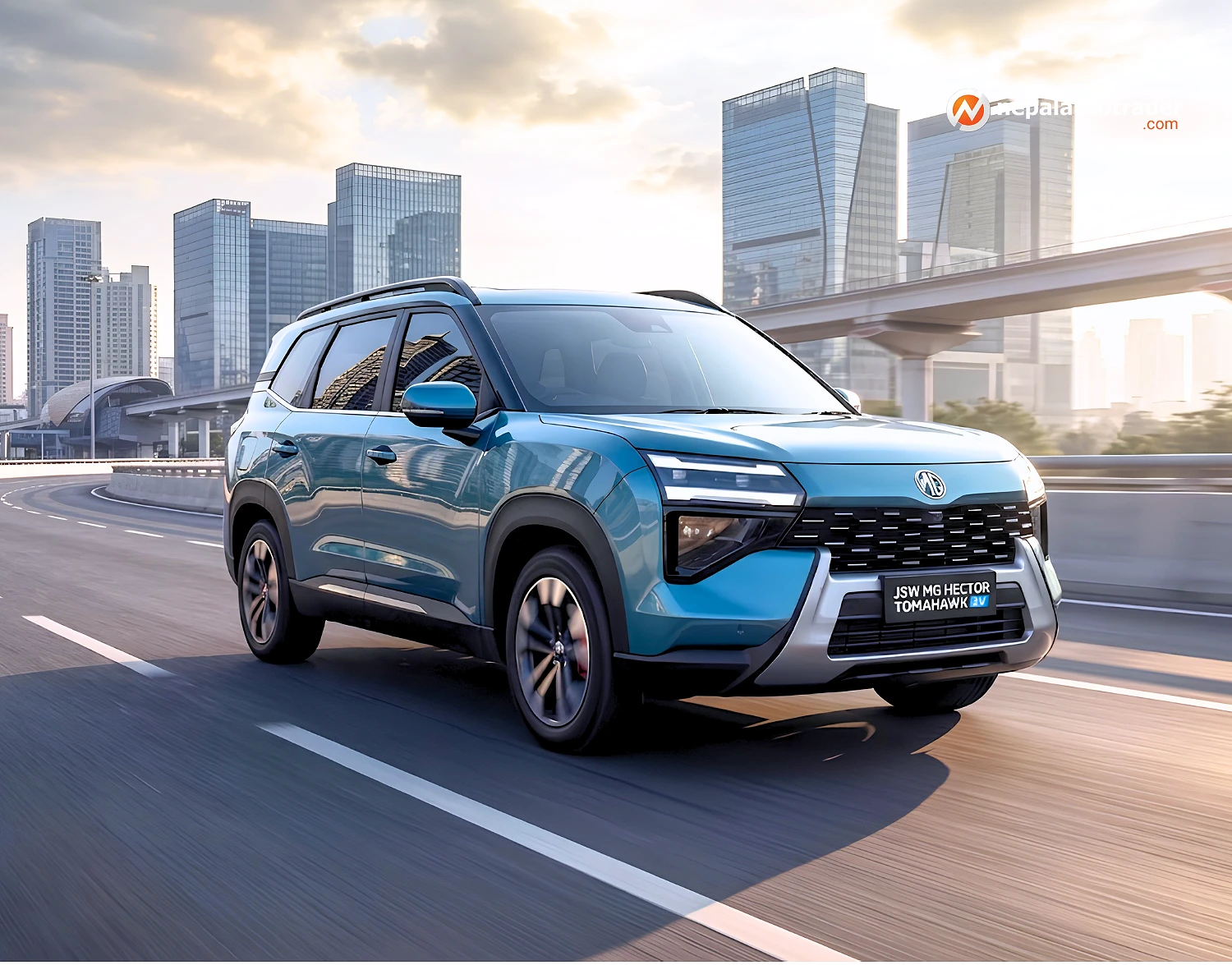
The Hector has always been associated with space and technology, but the Hector Tomahawk EV pushes that formula firmly into the electric era. JSW MG Motor India has introduced the seven seat SUV in India and opened bookings, giving buyers a substantially larger electric option within the brand's growing portfolio.
The starting price is Rs 19.49 lakh. That figure puts the Tomahawk into an increasingly competitive Indian EV market, but its seven seat layout gives it a different appeal from smaller electric SUVs. It is aimed at families who want the practicality of a large SUV without giving up the technology that has become central to newer EVs.
The timing is significant. MG is already expanding its India made electric range, and the Tomahawk gives the company another way to attract customers who need more seats and more cabin space. The implications extend far beyond the company itself, because the arrival of larger electric SUVs gives consumers another reason to consider moving away from conventional powertrains.
There is nothing particularly timid about the Hector Tomahawk's design. The front gets a slim closed off grille, textured chrome detailing and an illuminated MG logo. Rectangular LED headlights sit alongside distinctive daytime running lights, giving the SUV a clean but recognisable face.
The side profile is deliberately upright. Large windows, conventional pull type door handles and chunky proportions reinforce its family SUV character, while 18 inch dual tone alloy wheels and red brake calipers add a sharper edge.
At the rear, wraparound LED tail lamps sit below a large roof spoiler and silver skid plate. It is a familiar SUV silhouette, but the electric front end and cleaner surfacing make the Tomahawk feel more contemporary than the conventional Hector formula.
Inside, MG has taken a quieter approach. The cabin uses a light brown and black theme, with soft touch materials across the dashboard, door pads, armrests and steering wheel. The result appears more restrained than the exterior, which is probably the right call for a vehicle designed around family use.
| Design and cabin feature | Hector Tomahawk EV |
|---|---|
| Seating | Seven seats |
| Wheels | 18 inch dual tone alloy wheels |
| Front seats | Ventilated, driver six way power adjustment, passenger four way power adjustment |
| Infotainment | 15.6 inch touchscreen |
| Driver display | 8.8 inch digital display |
| Audio | 10 speaker Infinity sound system |
The cabin is packed with equipment, and some of it is aimed squarely at everyday convenience. The 15.6 inch infotainment screen dominates the dashboard, with wireless Android Auto and Apple CarPlay. A separate 8.8 inch digital driver display keeps the instrument information in front of the driver, while wireless phone charging removes another cable from the cabin.
MG has also added a couple of features that are less predictable. A dedicated pet mode is designed around owners travelling with animals, while an inbuilt karaoke system adds a distinctly entertainment focused touch. These features may not decide a purchase on their own, but they show how manufacturers are trying to make EV cabins feel like living spaces rather than simply places to operate a car.
Safety equipment is equally substantial. The SUV gets six airbags, electronic stability control, hill hold assist, tyre pressure monitoring, front and rear parking sensors, all wheel disc brakes, an electronic parking brake and a 360 degree camera.
Underneath the Tomahawk is MG's ADAPT platform, making this an important model for the company's electric vehicle strategy. The powertrain pairs a 69.2 kWh battery with a 150 kW electric motor.
That is a substantial electric setup for a seven seat SUV. The source material does not specify the motor's torque figure or an official driving range, so those numbers are best left out rather than filled with estimates. That restraint matters, especially with an EV where range figures can vary significantly depending on testing standards and conditions.
| Powertrain specification | Hector Tomahawk EV |
|---|---|
| Platform | MG ADAPT |
| Battery | 69.2 kWh |
| Electric motor | 150 kW |
| DC charging | 90 kW |
| Vehicle to home | Available |
| Official range | Not specified in the source |
| Torque | Not specified in the source |
The Tomahawk supports 90 kW DC fast charging, giving owners access to faster charging when compatible infrastructure is available. It also supports vehicle to home functionality, a feature that broadens the role of the battery beyond simply powering the SUV.
The most obvious distinction is size and seating. MG's existing India made EVs have helped establish the brand in electric mobility, but the Tomahawk moves into a larger family SUV proposition. That makes direct comparisons with smaller EVs less useful. Buyers looking at this vehicle are likely to care as much about seating capacity, cabin technology and practicality as they do about outright efficiency.
The wider Indian EV market is also becoming more crowded, with manufacturers increasingly adding SUVs rather than relying only on small urban electric cars. The Tomahawk arrives into that shift with a familiar name, a substantial battery and a technology heavy cabin.
MG's experience with models such as the MG Windsor EV also gives the brand an existing electric product story in the region. In Nepal, the MG S5 EV has already established a presence among popular electric SUVs. The Hector Tomahawk, however, is playing a different game, with seven seats and a much larger overall proposition.
That difference could become important if MG eventually expands the model into other right hand drive markets. For now, however, the confirmed information concerns India, where bookings have opened.
Bookings for the Hector Tomahawk EV are open in India, with the starting price set at Rs 19.49 lakh. The source does not provide a detailed variant wise pricing structure or a confirmed delivery schedule, so there is no reason to invent one.
The bigger question is whether this electric SUV becomes part of MG's wider regional strategy. MG already has India made models in Nepal, including the Windsor EV, while GO Automobiles has taken responsibility for JSW MG vehicle distribution in the country. The brand's changing product strategy makes future expansion worth watching, but there is no confirmed Nepal launch information for the Hector Tomahawk in the supplied source.
For now, the Tomahawk is best understood as a significant new step for JSW MG Motor India. It brings together seven seats, a 69.2 kWh battery, a 150 kW motor, fast charging and a long technology list in one package. The real challenge is not the equipment. It is execution, especially how MG balances price, practicality and charging convenience as larger EVs become more common.
That is what will determine whether the Hector Tomahawk becomes simply another new electric SUV, or a model that genuinely changes what family buyers expect from one.
Q: What is the starting price of the MG Hector Tomahawk EV?
A: The Hector Tomahawk EV starts at Rs 19.49 lakh in India. JSW MG Motor India has opened bookings at this starting price.
Q: How many people can the MG Hector Tomahawk EV seat?
A: The Hector Tomahawk EV is a seven seat electric SUV. Its seating capacity is one of the key differences between the Tomahawk and smaller electric SUVs in MG's portfolio.
Q: What battery and motor does the Hector Tomahawk EV use?
A: It uses a 69.2 kWh battery paired with a 150 kW electric motor. The SUV also supports 90 kW DC fast charging.
Q: Does the Hector Tomahawk EV have Level 2 ADAS?
A: Yes. The top variant is equipped with Level 2 ADAS, including autonomous emergency braking, adaptive cruise control, lane keep assist and traffic jam assist.
Q: Is the MG Hector Tomahawk EV coming to Nepal?
A: The supplied source confirms its launch and booking availability in India, but does not confirm a Nepal launch. MG already sells India made electric models in Nepal, so the regional strategy will be worth watching.
Q: What charging technology does the Hector Tomahawk EV support?
A: The SUV supports 90 kW DC fast charging and also offers vehicle to home functionality. The source does not provide a specific charging time from one battery percentage to another.

Nepal Auto-Trader is one-stop platform for all automotive needs. We provide unbiased and unparalleled news/reviews of all auto-motives being launched in Nepalese Auto-Industry. Find recent updates and price of bikes/cars, compare and review recently launched bikes/cars, buy/sell/trade reconditioned cars/bikes and all government news about changing rules and regulation, road safety by subscribing us.

Subscribe to our Newsletter
© Copyright 2026, Nepal Autotrader


.png)
.png)